Extra Space Storage Putting Rent Increases on Pause

Extra Space Storage Putting Rent Increases on Pause

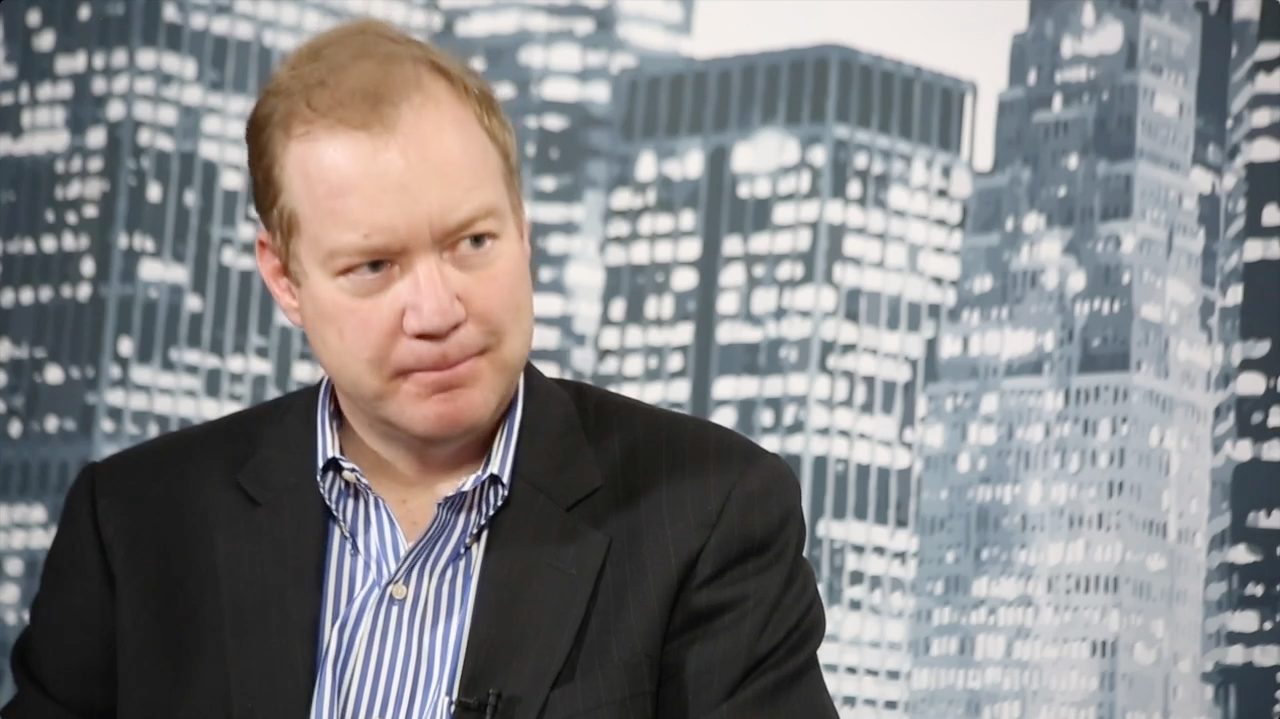
Joe Margolis, CEO of Extra Space Storage Inc. (NYSE: EXR), joined REIT.com for a video interview at REITWeek 2017: NAREIT’s Investor Forum at the New York Hilton Midtown.

Margolis took over the helm at Extra Space at the start of 2017.

Margolis noted that significant new supply of storage space is appearing in certain markets, which is putting pressure on Extra Space’s operating performance.

Meanwhile, after several years of increasing rental rates by double digits in some markets, it’s time for a pause, Margolis said: “It’s hard to continually push rates 15 percent without backing off.”

Margolis also said he expects the company’s third-party management platform to expand. He noted that third-party management provides Extra Space with revenue without capital investment, in addition to increased scale and access to data. Furthermore, it creates an acquisition pipeline, Margolis noted.

(Why?)

Published at Wed, 19 Jul 2017 17:39:32 +0000

Physicians Realty CEO Says Market for Medical Office Buildings Robust

Physicians Realty CEO Says Market for Medical Office Buildings Robust

John Thomas, president and CEO of Physicians Realty Trust (NYSE: DOC), joined REIT.com for a video interview at REITWeek 2017: NAREIT’s Investor Forum at the New York Hilton Midtown.

Physicians Realty Trust made nearly $250 million of investments in the first quarter. Thomas described the market for medical office buildings as “very robust” right now. The amount of capital pouring in to the medical office building market from foreign investors and REIT investors “couldn’t be better,” he added.

Thomas noted that since the company’s initial public offering (IPO) almost four years ago, its cost of capital has improved every quarter. Since the IPO, Physicians Realty Trust has had eight follow-on offerings, he noted. Today, the company holds a little more than $3.5 billion in assets, compared with about $125 million in assets at the time of the IPO.

As for uncertainty in the outlook for federal health care legislation, Thomas pointed out that commercial insurance and employer-based insurance are still the primary drivers of income to the physicians and hospitals that lease space. In the near term, there should be no negative impact on Physician Realty’s business, he added.

(Why?)

Published at Wed, 19 Jul 2017 12:46:15 +0000

REIT Capital Raising Buoyed by Low Interest Rates

REIT Capital Raising Buoyed by Low Interest Rates

REITs raised more capital in the first half of the year than they did in the same period of 2016, as companies continue to take advantage of low interest rates, according to analysts.

Through June 30, REITs raised a total of approximately $44.2 billion in 2017, 17 percent more than the $37.9 billion raised during the first half of 2016, according to NAREIT data.

“Capital markets are active and healthy. There’s a significant amount of capital committed to real estate,” said David Kessler, national director of CohnReznick’s commercial real estate industry practice.

REITs raised $21.7 billion in unsecured debt in the first half of 2017, an increase of 7 percent from the $20.3 billion in the first half of 2016.

Jeff Horowitz, global head of real estate, gaming and lodging at Bank of America Merrill Lynch, noted that there has been healthy demand from investors looking for yield on investment-grade debt.

Keven Lindemann, senior director of global real estate at S&P Global Market Intelligence, added that companies have had fairly consistent access to the unsecured debt market.

“Despite the threat of higher interest rates, on an historical basis rates are still extraordinarily low and you are seeing companies take advantage of that,” he said.

As for capital raising on the equity side, the market has been receptive to companies that can demonstrate a good use of the proceeds, according to Horowitz. “The markets have been relatively wide open,” he said.

REITs raised $19.8 billion in secondary equity in the first half of 2017, up 21 percent from the total of $16.3 billion raised in the same period a year before. REIT initial public offerings (IPOs) raised $2.6 billion in 2017 through June 30, more than doubling the $1.2 billion raised in the year-earlier period.

Data from S&P Global Market Intelligence shows that the largest issuers of debt and equity year to date have been in the specialty REIT segment, which includes data center and timber REITs among others, at $10.2 billion. Residential REITs raised $7.8 billion, followed by retail REITs at $7.2 billion. Equinix, Inc. (NASDAQ: EQIX) and Invitation Homes Inc. (NYSE: INVH) were the most active issuers in the first half among individual companies. Equinix raised approximately $3.4 billion in debt and equity, while Invitation Homes held the second largest REIT IPO on record, raising approximately $1.7 billion.

In comparison to debt issuance, demand for new common equity has been more muted, Lindemann said. Equity REITs posted a total return of 5.5 percent for the year through July 17, according to the FTSE NAREIT All Equity REIT Index. Meanwhile, the S&P 500 recorded a total return of 11.1 percent during the same period.

“Any time you have an environment where it’s not clear that common equity issuance would be at a premium to net asset value (NAV), companies are going to be more cautious,” Lindemann said.

Kessler noted that having REIT share prices trade significantly below NAV will likely trigger increased merger and acquisition (M&A) activity. Large, well-capitalized REITs will be attracted to merging with REITs that trade at a discount to NAV.

“That’s an instant margin play for them. I think we’ll see more of that,” he said.

Lindemann said he expects REIT capital raising to slow in the third quarter and end the year in line with 2016 levels. Common equity issuance will remain subdued, and REITs will continue to tap the unsecured debt market, he said.

(Why?)

Published at Tue, 18 Jul 2017 17:34:19 +0000

Bluerock Residential On Track to be Net Acquirer in 2017

Bluerock Residential On Track to be Net Acquirer in 2017

Ramin Kamfar, chairman, president and CEO of Bluerock Residential Growth REIT, Inc. (NYSE: BRG), joined REIT.com for a video interview at REITWeek 2017: NAREIT’s Investor Forum at the New York Hilton Midtown.

Kamfar said he expects Bluerock to be a net acquirer of properties this year. He pointed out that millennials are forming households at a rate of about 2 million a year. Of that group, 70 percent will rent and stay in rental properties for a period of 10 years or longer, he noted.

“That is a big tailwind for our industry and is going to generate a tremendous amount of demand over the next decade,” Kamfar said.

As for geographic markets, Kamfar stressed that Bluerock wants to be in growth markets due to the 80 percent correlation between job growth and apartment demand. The average employment growth in Bluerock’s markets is 3 percent per year, which Kamfar says is double the rate for the entire United States

“You’ll see us outside the Sun Belt as we grow,” Kamfar said.

Meanwhile, Kamfar noted that Bluerock’s decision to internalize management in the third quarter fulfills a promise made to investors when the company went public. The benefits of internal management include a slower pace of growth in general and administrative (G&A) costs, as well as increased acceptance of the REIT among larger institutional investors, he said.

(Why?)

Published at Tue, 18 Jul 2017 15:21:32 +0000

Infrastructure REIT Uniti Highlights Growing Role of Fiber Telecommunications

Infrastructure REIT Uniti Highlights Growing Role of Fiber Telecommunications

Kenny Gunderman, president and CEO of Uniti Group Inc. (NASDAQ: UNIT), joined REIT.com for a video interview at REITWeek 2017: NAREIT’s Investor Forum at the New York Hilton Midtown.

Uniti, previously known as Communications Sales & Leasing, focuses on the acquisition and construction of mission-critical communications infrastructure such as fiber optics, wireless towers and ground leases.

Gunderman described fiber as an increasingly important asset in the wireless infrastructure system, pointing out that macro towers are all connected back to the internet by fiber.

“Wireless broadband is far and away the biggest growth driver for our industry,” Gunderman said. He noted that 85 to 90 percent of the economics required to build small cell assets comes from fiber optics.

As the only fiber REIT that exists today, “we think we’re really well-positioned with that trend,” Gunderman said.

Meanwhile, Gunderman noted that mergers and acquisitions (M&A) remain “very active” in the segment.

“For us, there’s a tremendous amount of opportunities,” Gunderman said. “There’s billions of dollars of fiber that’s in the ground today, and there’s billions of dollars of fiber that’s being built.”

(Why?)

Published at Mon, 17 Jul 2017 18:40:20 +0000

Fitch Analyst Says REITs Looking to Reduce Cost of Financing

Fitch Analyst Says REITs Looking to Reduce Cost of Financing

Steven Marks, managing director at Fitch Ratings, joined REIT.com for a video interview at REITWeek 2017: NAREIT’s Investor Forum at the New York Hilton Midtown.

Marks commented on a recent report by Fitch into REITs’ bank borrowing exposure. Fitch looked at the sum of withdrawals on revolving lines of credit and outstanding term loans, comparing them with the total amount of debt outstanding. At the end of 2009, the level was about 10 percent. By the first quarter of 2017, it had risen to 18 percent, he noted.

Part of the reason for the increase is that banks have been pushing term loan products to REITs because it helps them from a capital charge perspective, according to Marks. REITs like term loans because they are looking for ways to reduce the cost of financing as it becomes more challenging to grow organically, he said.

Marks also noted that retail REITs are “generally doing the right thing” in terms of ensuring asset locations are relevant for both tenants and customers.

Industrial REITs, meanwhile, are finally enjoying their “day in the sun,” according to Marks. While supply levels have increased, there has also been robust space absorption in the sector. As a result, occupancies are increasing on the margin, he noted.

(Why?)

Published at Mon, 17 Jul 2017 19:15:30 +0000

Real Estate Investment Strategist Sees Valuations Remaining Flat

Real Estate Investment Strategist Sees Valuations Remaining Flat

Scott Crowe, chief investment strategist at CenterSquare Investment Management, joined REIT.com for a video interview at REITWeek 2017: NAREIT’s Investor Forum at the New York Hilton Midtown.

Crowe discussed real estate valuations on the private and public side.

Most investors on the private side, particularly those focused on the core gateway markets, should expect real estate prices to continue to remain flat, Crowe said.

As for the REIT market, price returns have been flat the last two years. That is signaling that the strong returns that have been seen from core real estate “are behind us,” Crowe said.

“The tailwind of cap rate compression is largely over, and now, almost 10 years into the recovery, we have engineered somewhat of a supply response in core gateway markets,” Crowe said. In turn, that is resulting in a “pretty significant” deceleration in net operating income (NOI) growth, he noted.

Turning to property sectors, Crowe highlighted the strong fundamentals of single-family rental, data center and industrial REITs.

Retail real estate, meanwhile, is going through a permanent repricing as an asset class, according to Crowe. That’s already occurred in the REIT space, he noted.

“I think retail is a great non-consensus area to be looking at right now,” Crowe said.

Meanwhile, Crowe also emphasized the importance of focusing on supply at this point in the real estate cycle.

(Why?)

Published at Fri, 14 Jul 2017 14:13:01 +0000

Dutch Fund Manager Says Post-Brexit Uncertainty Remains for Global Real Estate

Dutch Fund Manager Says Post-Brexit Uncertainty Remains for Global Real Estate

Hans Op ‘t Veld, head of listed real estate at Dutch pension fund PGGM, joined REIT.com for a video interview at REITWeek 2017: NAREIT’s Investor Forum at the New York Hilton Midtown.

Op ‘t Veld commented on the investment climate in the wake of last year’s Brexit referendum in the United Kingdom.

“We are now in a situation that is not all that much different from last year in the sense that we still don’t know exactly what Brexit is going to be like,” Op ‘t Veld said.

Despite the lingering uncertainty, London continues to be a safe bet, according to Op ‘t Veld. “A lot of investors are looking for capital preservation, and they still believe London is a safe place,” he said.

Urban areas with trophy assets, including Manhattan and San Francisco, continue to attract investor attention, Op ‘t Veld said. In addition, Germany is also seen as a safe haven, he noted.

Op ‘t Veld also discussed PGGM’s goal of reducing the carbon footprint of its property portfolio by 50 percent. He noted that PGGM’s goal was met with skepticism when it was first announced. Now, however, companies have overtaken PGGM by seeking a zero percent footprint, he added.

(Why?)

Published at Fri, 14 Jul 2017 14:29:57 +0000

Ashford Hospitality Prime Refines Focus to Luxury Hotels

Ashford Hospitality Prime Refines Focus to Luxury Hotels

Richard Stockton, president and CEO of Ashford Hospitality Prime, Inc. (NYSE: AHP), joined REIT.com for a video interview at REITWeek 2017: NAREIT’s Investor Forum at the New York Hilton Midtown.

In January, Ashford Prime announced refinements to its business strategy. They included the decision to make the luxury hotel chain segment of the market a primary focus.

Stockton, who became CEO last November, said a review of revenue per available room (RevPAR) data dating as far back as the 1980s demonstrated that the highest growth potential came from the luxury chain segment.

Since January, the company has acquired two luxury assets, the Hotel Yountville in Yountville, California, and the Park Hyatt Beaver Creek Resort & Spa in Beaver Creek, Colorado.

Meanwhile, Stockton said the property in the Ashford Hospitality Prime portfolio that seems to receive the most attention from investors is the Ritz-Carlton in St. Thomas, U.S. Virgin Islands. He described the hotel as “by far the leader” in its submarket.

(Why?)

Published at Thu, 13 Jul 2017 19:57:10 +0000

Fidelity Portfolio Manager Says Germany Offers Stable Real Estate Investments

Fidelity Portfolio Manager Says Germany Offers Stable Real Estate Investments

Steve Buller, portfolio manager at Fidelity Investments, joined REIT.com for a video interview at REITWeek 2017: NAREIT’s Investor Forum at the New York Hilton Midtown.

Buller noted that Germany is currently home to some of the most stable global investments. In particular, the German residential sector is experiencing a “significant” supply-demand imbalance. Although the market is regulated by the German authorities, rental rate growth is starting to emerge, he noted.

Following many decades of dormant performance, the German office market is also starting to see rental growth in the major cities of Berlin, Frankfurt and Hamburg, Buller observed.

Turning to the United States, Buller noted that while growth is still evident in many property sectors, the pace is decelerating.

(Why?)

Published at Thu, 13 Jul 2017 17:28:26 +0000