EPA ENERGY STAR Program Incorporating Tenant Recognition

EPA ENERGY STAR Program Incorporating Tenant Recognition

Jean Lupinacci, director of the commercial and industrial branch of ENERGY STAR at the Environmental Protection Agency (EPA), joined REIT.com for a video interview at NAREIT’s 2017 Leader in the Light Working Forum at the Hilton Austin in Austin, Texas.

Lupinacci discussed the EPA’s plans to introduce Tenant Star, a program to recognize energy-efficient design, construction and operation of tenant spaces.

“Trying to reach the tenants to educate them, so they can do their part, fits perfectly into the overall mission of ENERGY STAR,” she said.

The EPA is currently seeking public comment on tenant recognition criteria, Lupinacci noted.

Once the Tenant Star recognition is in place, Lupinacci said it will provide REITs an opportunity to “close the gap” with their tenants at the time the lease is signed.

(Why?)

Published at Tue, 07 Feb 2017 15:20:10 +0000

Prologis Looking at Technologies to Move Sustainability Needle

Prologis Looking at Technologies to Move Sustainability Needle

Jeannie Renne-Malone, vice president of sustainability at Prologis, Inc. (NYSE: PLD), joined REIT.com for a video interview at NAREIT’s 2017 Leader in the Light Working Forum at the Hilton Austin in Austin, Texas.

Prologis was named the 2016 recipient of NAREIT’s Leader in the Light award in the Industrial sector. This marks the fifth consecutive year that Prologis has won the award.

Renne-Malone noted that Prologis has already addressed much of the “low-hanging fruit” in terms of sustainability initiatives.

“We need to be looking at the next innovative technologies and initiatives that will continue to move the needle,” she said. Specifically, Prologis needs to consider where it and the industry will be in the next 10 to 20 years with respect to energy, water and waste, Renne-Malone noted.

Meanwhile, Renne-Malone said sustainability efforts for the foreseeable future will likely concentrate on data collection and benchmarking. She also expects to see a more robust approach taken to the cost-benefit analysis of sustainability investments.

(Why?)

Published at Tue, 07 Feb 2017 20:22:09 +0000

Apartment REIT AvalonBay Expanding Solar Power Projects

Apartment REIT AvalonBay Expanding Solar Power Projects

Mark Delisi, senior director for corporate responsibility at AvalonBay Communities, Inc. (NYSE: AVB), joined REIT.com for a video interview at NAREIT’s 2017 Leader in the Light Working Forum at the Hilton Austin in Austin, Texas.

Delisi discussed AvalonBay’s plans to expand its solar power capabilities. With assets located on both the East Coast and West Coast, the company’s portfolio is particularly well-suited for solar power, he said. Additionally, incentives for solar installation are “excellent,” according to Delisi.

“We’re looking to expand [solar power] as much as we possibly can across the portfolio,” Delisi said.

Delisi also stressed the importance of tying sustainability and corporate governance issues directly into the company’s business model. “I think you’re just going to see more and more of that,” he said.

Meanwhile, Delisi highlighted a project underway at AvalonBay to install smart meters in the majority of its New York high-rise apartment buildings. The process allows AvalonBay to “get an EKG on the buildings, in terms of how they are operating real-time,” Delisi said. He added that the company plans to expand the project in due course.

(Why?)

Published at Mon, 06 Feb 2017 17:23:32 +0000

RMR Sustainability Leader Stresses Need to “Connect the Dots” for Employees

RMR Sustainability Leader Stresses Need to “Connect the Dots” for Employees

John Forester, director of energy and sustainability at real estate management company The RMR Group, joined REIT.com for a video interview at NAREIT’s 2017 Leader in the Light Working Forum at the Hilton Austin in Austin, Texas.

Forester discussed some of the biggest issues involved with tenant engagement. He noted that tenants are usually engaged, provided that sustainability projects are easy to incorporate and have a well-defined value proposition.

Forester added that “creativity” is sometimes needed to align an individual tenant’s interest in sustainability with the priorities of the company.

Meanwhile, Forester stressed that employee engagement is also vital to delivering sustainability results. “Employees are core to the success of all the portfolio-wide programs,” he noted. In terms of improving internal sustainability awareness, Forester emphasized the need to “connect the dots” between daily tasks and the metrics of sustainability reporting.

Forester also commented on recent EnergyStar milestones achieved by properties within the Government Properties Income Trust (NASDAQ: GOV) portfolio, which is managed by RMR’s operating subsidiary.

“We’ve achieved that by making sure energy performance is at the forefront of operations,” he said.

(Why?)

Published at Mon, 06 Feb 2017 17:18:43 +0000

REITs Reshaping Communities: Hudson Pacific

REITs Reshaping Communities: Hudson Pacific

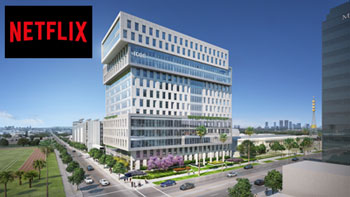
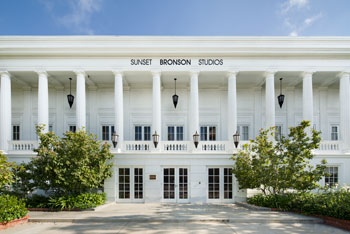
In October, streaming media company Netflix, Inc. signed a 10-year, multi-stage lease for 99,250 square feet of stages and production offices at Hollywood’s Sunset Bronson Studios. The deal, the latest in an ongoing partnership with Hudson Pacific Properties, Inc. (NYSE:HPP), came shortly after Netflix preleased Hudson Pacific’s entire 323,000-square-foot adjacent ICON office development on Sunset Boulevard completed at the end of 2016.

Good to Know

  • Including land for development, Hudson Pacific Properties’ portfolio totals nearly 18 million square feet in California and the Pacific Northwest.
  • Collectively, Hudson Pacific’s Sunset Gower and Sunset Bronson properties comprise the largest independently operated sound stage facilities in the country.
  • Sunset Bronson Studios is the original home of Warner Brothers Studios, Looney Tunes and Rin Tin Tin.
  • Judge Judy has dished out no-nonsense justice in her televised courtroom at Sunset Bronson for the last 20 years.
  • The first talking film, “The Jazz Singer” was filmed at Sunset Bronson.

The deal highlights a renewed interest in Hollywood as a center of production among film and television companies and networks, increasing demand for studio real estate as Netflix continues to produce popular original content such as “House of Cards” and “Orange is the New Black.”

“Netflix’s arrival signals the location’s official resurgence as the epicenter of global media and entertainment production,” explains Christopher J. Barton, Hudson Pacific Properties’ executive vice president for development and capital investments. “Leading companies and networks want to be there for the history, the talent and, increasingly, proximity to each other.”

IRREPLACEABLE ASSETS

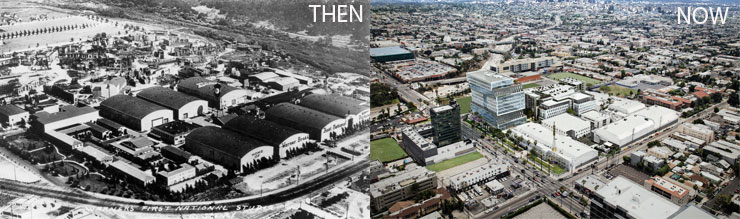
Hudson Pacific Properties turned its focus to Hollywood in 2007 when it first acquired Sunset Gower Studios, the original headquarters for iconic Columbia Pictures on Sunset Boulevard. Like Sunset Gower, Sunset Bronson Studios – acquired in 2008 – was built in the 1920s. It is steeped in old Hollywood history as the home of the original Warner Brothers Studios and the first talking film, “The Jazz Singer.”

The publicly traded REIT saw a rare, long-term opportunity to acquire two historic studios and 25 acres in a prime media market where talent wants to both work and live.

“At the time we acquired them, we also knew we’d be able to capture upside from improved operating efficiencies, which we have since achieved. And there were several unique development opportunities due to existing studio lot land utilization and available zoning density,” explains Barton. “So, in every sense of the word, these assets are irreplaceable.”

Renovating these studios into full media campuses also required bringing them up to the latest production standards and preserving some of their history. For example, Hudson Pacific restored the site’s landmark radio tower, one of two matching towers built in the mid-20s to serve Warner Brothers’ affiliate radio station KFWB, and returned it to its original location on the Sunset Bronson lot. Hudson Pacific also restored the Warner Brothers Mansion listed on the National Register of Historic Places.

“We worked extensively with Hollywood Heritage on developing a scope and plan for the Mansion restoration project,” says Barton. “These considerations had to be balanced with the ultimate goal—to design a building that would help usher Sunset Bronson into the modern era of media and entertainment production, positioning the studio as a world-class facility where industry leaders want to be.”

“As you might imagine, building over 500,000 square feet in phases on two active studio lots has required extensive coordination among our onsite employees, our construction team, our tenants and the community,” he says.

To coordinate these efforts, Hudson Pacific has worked closely with the city of Los Angeles – including the Mayor’s office, Councilman Mitch O’Farrell and the city planning department. “We have [also] worked very closely with local community groups to incorporate their feedback and address any concerns in terms of the design of the various projects undertaken at Sunset Gower and Sunset Bronson,” says Barton.

This includes managing traffic impact, pedestrian experience, coordination with existing tenants, and “enabling business to proceed as usual— as much as possible, mitigating noise disruption, and creating clear and safe paths of travel for everyone on the lot.”

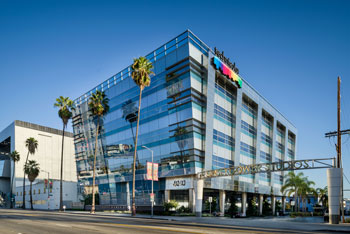
Sunset Gower currently houses Technicolor’s North American headquarters and 12 sound stage facilities. It is one of the largest independent entertainment properties in the country at roughly 16 acres. Sunset Bronson’s media campus also provides production, post-production and support facilities. Both studios boast numerous hit television and production credits.

LOOKING AHEAD

“Netflix’s desire to be proximate to production facilities and stages was the driving factor in its decision to sign a long-term lease for the entirety of ICON.” -Bill Humphrey, General Manager, Hudson Pacific Media

Along with renovating existing properties, Hudson Pacific saw the larger trend towards streaming media and the increasing demand for studio office space. Its vision for the soon-to-open class-A ICON office building on the northeast corner of Sunset Bronson lot immediately attracted the attention of Netflix’s leadership, who were looking to consolidate and expand.

“Netflix’s desire to be proximate to production facilities and stages was the driving factor in its decision to sign a long-term lease for the entirety of ICON,” explains Bill Humphrey, general manager for Hudson Pacific Media. “They were able to lease rather than own their facilities— different from the traditional network model, centralize their Southern California operations in a single location, and customize the space to reflect their unique corporate culture.”

“Silicon Valley companies realize not only the facilities, but the talent and the history is in L.A. and especially in Hollywood, and they want to be there,” says Humphrey.

Hudson Pacific designed ICON with these needs in mind.

“A campus environment is all about collaboration and connection, which is so integral to today’s media firms,” explains Barton. “ICON features large, nearly 25,000-square-foot open floor plates with 45-foot column-free spans, providing a potential tenant with ultimate flexibility.”

The vertical campus, designed by Gensler Architects, includes multiple outdoor common spaces with patios and terraces that facilitate indoor-outdoor work flow and provide natural light and panoramic views. Other amenities include electric car charging stations, bike storage, showers and locker rooms.

Hudson Pacific developments in the works include CUE, a 90,000-square-foot creative office building adjacent to ICON at Sunset Bronson scheduled for a mid-2017 completion. Hudson Pacific also utilized the vertical campus design of ICON to design a recently approved 300,000-square-foot creative office tower across the street from Sunset Gower.

BUILDING A BLOCKBUSTER

In recent years, Hollywood has witnessed a renewed interest in its creative community and its longstanding reputation as a media production center. That is in part due to improved facilities and new developments like those at Sunset Bronson and Gower Studios, especially those adapting to changes in content distribution.

“There were several unique development opportunities due to existing studio lot land utilization and available zoning density.” -Christopher J. Barton, EVP, Development & Capital Investments at Hudson Pacific

“Fundamental shifts in how content is created and distributed are in large part behind this resurgence, although the urbanization movement—the preference for companies to locate in 24/7, live-work-play neighborhoods—has also increased Hollywood’s desirability. This is a transformation that’s really been underway for several years now,” explains Humphrey.

Longer leases mean more predictable cash flow. “On all fronts, the studios have surpassed our expectations, and many of our investors’ expectations of value,” Barton says.

In November, Hudson Pacific reported an 8.6 percent increase in third quarter revenues from the year-earlier. Revenue from the REIT’s media properties increased by 22.1 percent.

“Hudson Pacific’s studio ownership affords us unparalleled facilities and capabilities to capitalize on these industry changes,” says Humphrey, citing the demand for constant streaming content as one component that helps Hudson Pacific attract and retain both Silicon Valley companies and traditional media companies as tenants. “Without question, heightened demand—and a growing desire to have a guaranteed footprint at a predetermined cost—enhances both our cash flow predictability and the value of our stages and stage-adjacent office space,” he says.

Barton agrees, adding that, “Having a leading, visionary player like Netflix put down roots at Sunset Bronson signals Hollywood’s best days are ahead, and this is a place where the most forward-thinking companies want to be.”

(Why?)

Published at Wed, 01 Feb 2017 03:49:49 +0000

Teacher Say, Student Do

Teacher Say, Student Do

Mentors come in all shapes and sizes, and they often stumble into our lives when we need them most.

It could be the apartment maintenance man who provides a fatherless teen in a new city with life lessons, and a few self-defense skills. Or, an English teacher at a boys’ prep school who challenges his students to live an extraordinary life while also getting them to do their poetry homework.

Mr. Miyagi from “The Karate Kid” and James Keating from “Dead Poets Society” are two memorable Hollywood mentors. The movies are filled with mentor archetypes, primarily because we all have those individuals (be it a family member, teacher, coach, employer) who have helped show us the way, delivered sage advice or helped us overcome some obstacle.

I’ve had a number of different people over the years that have helped shape the man I have become, both personally and professionally. I never thanked them properly for the guidance they provided or let them know the impact they made on me.

But that is exactly why mentoring is so important: You never know what or when a word of wisdom or a show of encouragement can make all the difference.

At REITWorld 2016, I asked a number of REIT CEOs about the importance of mentorship and words of advice for the next generation of REIT leaders.

Federal Realty Investment Trust (NYSE: FRT) CEO Don Wood advised would-be REIT executives to get their hands dirty and learn first hand about all areas of the real estate business. Doing so, he says, will make you imminently more valuable long term.

Ric Campo, chairman and CEO of Camden Property Trust (NYSE: CPT), encourages all of his employees to give back as mentors. The company offers a program to educate staff on how to become better mentors. That approach stems from something one of Campo’s own mentors taught him, “Business is about more than just the bottom line.”

This issue of REIT magazine concludes with a column by Ventas (NYSE: VTR) Chairman and CEO Debra Cafaro sharing her thoughts on “paying it forward” and how mentoring young employees has long-lasting benefits—for everyone involved.

“We’re committed to teaching them, responding when they need us, including them in strategic discussions and working directly with them, frequently without layers, to help further their careers,” Cafaro says. “There is no greater joy than watching these young men and women gain confidence and grow.”

(Why?)

Published at Sun, 29 Jan 2017 18:12:11 +0000

How Business and Leisure Travelers Affect Hotel REITs

How Business and Leisure Travelers Affect Hotel REITs


Hotel executives will tell you that their business is pretty simple: You need heads in beds at the highest possible rate. How lodging REITs and their competitors perform, however, often depends on which heads they want for their beds.

Overall, RevPAR (revenue per available room) growth for hotel REITs in 2016 was 3 percent, according to Simon Yarmak, director of equity research for Stifel Nicolaus & Co. That was softer than RevPAR growth of 6.25 percent in 2015 and 8.5 percent in 2014, he says.

Observers point to fewer business trips as the main culprit behind the slower growth of REIT-owned hotels. The corporate sector accounts for about 75 percent of demand in higher-end hotels, which most lodging REITs own, according to Lukas Hartwich, senior analyst of lodging and data centers for Green Street Advisors.

“We expect to see RevPAR growth of about 3 percent over the next three to six months,” says Hartwich. “Anecdotally, there are some expectations that corporate profit growth could come back stronger later in 2017. If that’s true, then the lodging sector will likely see more rapid RevPAR growth, too.”

However, hotel companies that target leisure vacationers are contributing to the general sector slowdown. Yarmak notes that an uptick in supply in major markets, particularly New York, and reduced demand from foreign travelers because of the strong U.S. dollar are impacting this segment of business.

“There’s been a little pick-up in leisure travel, but not as much as was anticipated in spite of low gas prices,” Yarmak says.

Business Travel Impact

DiamondRock Hospitality Co. (NYSE: DRH), caters to a customer base made up of one-third leisure travelers, one-third group business travelers and one-third business transient travelers (those who travel for work and have short stays that often arise at the last minute). That gives Mark Brugger, president and CEO of DiamondRock, a comprehensive perspective on the state of the lodging sector.

SECTOR STATS
SECTOR: Lodging
CONSTITUENTS: 17
YEAR-TO-DATE RETURN: 24.34%
DIVIDEND YIELD: 5.64%
MARKET CAP ($M): 49,495
AVG. DAILY VOLUME (SHARES): 1,609.2
(Data as of Dec. 31, 2016)
Source: FTSE NAREIT Lodging REIT Index

“Muted corporate profits for the past six quarters and weak GDP are the main culprits reducing business travel,” Brugger says. “Business transient travel is the softest, down 2.8 percent in the third quarter of 2016 for us and down 2 to 3 percent industry-wide.”

Apple Hospitality REIT’s (NYSE: APLE) 2016 RevPAR growth, which was 3 percent year-to-date through November, slowed to 1.5 percent during the third quarter. COO Krissy Gathright says this is partly a reflection of the fact that 70 to 75 percent of the company’s revenue is attributable to business travel, while group and leisure travel were the strongest contributors to growth in the third quarter. She highlights political uncertainty as another contributor to more modest growth.

Yarmak says the pull-back in transient business travel is particularly damaging because that group of travelers tends to pay the highest rates. Once again, a surge in corporate profits could ease that pain.

“The good news is that if corporate profits rise we can adapt quickly to a pick-up since these are mostly shortterm travelers,” says Gathright. “Even with business travel a little soft, we’re still seeing record occupancy levels. It’s just a little harder to drive rates up, and sometimes they have to be adjusted for the hotels to stay full.”

To offset sluggish business travel, Condor Hospitality Trust (NASDAQ: CDOR) invests in crossover hotels in locations that appeal to both business and leisure travelers in midsize cities, according to J. William Blackham, the company’s president and CEO. Condor focuses on properties in cities ranked between 20th and 60th in terms of the size of their economies.

“These are markets where a lot of capital hasn’t been deployed, so the yields are better for our shareholders,” Blackham says. Even though markets such as Atlanta and Jacksonville, Florida, have rebounded more slowly from the recession, they have higher job and population growth than the national average, according to Blackham, “so we think there’s more runway ahead for growth than there is in the top 20 markets.”

Leisure Travelers and REITs

Leisure travelers make up about one quarter of total lodging demand, according to Green Street. Consumer confidence, in particular, influences this travel segment, along with lower gas prices and wage growth.

According to Brugger, leisure travelers have been a bright spot for DiamondRock, particularly at the resort hotels the company purchased. DiamondRock’s top-performing properties in 2016 include hotels in spots such as Key West, Florida, and Charleston, South Carolina.

“Consumers are feeling a little better about spending money,” he says. “There’s also a shift in what people want. They want experiential travel and to stay someplace unique that they can put on Facebook and share with their friends.”

However, the leisure segment is still dealing with the effects of a strong dollar, which has cut into demand from foreign travelers. Additionally, it’s influencing the decisions of U.S. vacationers.

“Shopping is often a high priority for inbound international travelers, so fewer foreign travelers are coming to the U.S.,” Hartwich says. “At the same time, more Americans are traveling overseas because their dollars go further.”

Green Street’s research shows that foreign travelers are sometimes offsetting the impact of the stronger U.S. dollar by staying fewer nights in the country. In other instances, they’re choosier about how much they’re willing to spend, according to Brugger.

By way of example, Brugger points out that 16 percent of DiamondRock’s New York customers are international, versus an 8 percent rate across the company’s portfolio. Revenue in New York was down 4 percent for DiamondRock in 2016, even though its international occupancy rate was the same as 2015.

“International travelers are still coming,” he says. “They’re just shopping harder for better rates.”

Looking Forward

Following the presidential election, Brugger says investors are feeling optimistic, anticipating a growing economy in the short term. Still, he says DiamondRock is proceeding with caution.

We invest in properties in cities that are ranked between the 60th and the 20th metro areas in terms of the size of their economies.
– J. William Blackham, President & CEO Condor Hospitality Trust

“Everything is speculative, though, and we don’t have details about what policies will be implemented and how corporations will react,” says Brugger. “Right now, we think the modest deceleration of RevPAR will continue and we’ll see a little increase in supply in some cities. Demand depends a lot on corporate travel budgets, and that’s still uncertain.”

Brugger believes hotel companies will feel pressure to execute large deals like the Starwood-Marriott merger to compete for customers.

Meanwhile, an increase in interest rates could be positive for lodging REITs, according to Yarmak.

“If interest rates rise because of inflation, that could be good for lodging REITs since their leases are repriced daily,” he says. “Room rates haven’t risen much because of a weakness in the demand and supply chain, but if inflation picks up, that could push up rates.”

Brand Loyalty and Profitability

When it comes to how specific lodging REITs are performing in the current environment, observers say brand loyalty programs can make a difference.

Domestic travelers are more likely than international travelers to be loyal to a particular hotel brand, Hartwich says. Meanwhile, he notes that business travelers tend to be more brand loyal than leisure travelers. Consequently, REITs that own a larger number of hotels in a particular brand might see a positive or negative impact on profitability from loyalty programs, Hartwich says.

“Loyalty programs are adapting to younger guests, who want instant gratification, such as a glass of free wine or more bonus points upfront,” Gathright says. She also cites apps and website reservations as keys to locking down travelers’ business, especially in light of competition for their attention from online travel agencies. Notably, Yarmak says millennials are more likely to use online travel agencies and to set up price alerts for rebooking.

“The brand app or website is the most efficient and cost-effective way of booking a room and is our primary source of business,” Gathright says. “Brands like Hilton and Marriott offer discounted member pricing and personalized experiences for guests that are not available when people use online travel agencies.”

(Why?)
Published at Wed, 01 Feb 2017 03:28:20 +0000

NexPoint Residential Growing in Middle-Income Rental Niche

NexPoint Residential Growing in Middle-Income Rental Niche

NexPoint Residential Trust, Inc. (NYSE: NXRT) has carved out a niche within the multifamily sector by providing low- and middle-income renters with attractive properties in markets unencumbered by new supply of affordable housing.

With the planned acquisition of Milestone Apartments Real Estate Investment Trust (TSX: MST.UN) by Starwood Capital Group, Matt McGraner, chief investment officer at Dallas-based NexPoint, believes NexPoint will be the only publicly traded REIT whose sole focus is “workforce” renters. He says rental properties with value-add potential targeted at this segment of the rental market continue to offer some of the strongest investment returns in the multifamily sector.

During 2016, the company posted a total return on investment, based on total capital expenditure, of 78.9 percent. McGraner believes there is potential for another $4 to $5 per share of organic net asset value (NAV) growth in 2017.

While the number of acquisition opportunities has decreased since its public listing in April 2015, McGraner still sees room for expansion.

“There’s still enough for us to grow on a relative basis for a $500 million market cap company, where a $50 million or $100 million deal can move the needle for us,” he said.

Competition for assets is stiff, however, with demand coming from private investors and cross-border funds, among other sources, McGraner said.

Potential in Houston
At the end of 2016, NexPoint acquired a 924-unit apartment portfolio in Houston for approximately $108 million. McGraner described the deal as “opportunistic and contrarian” – just the type of investment NexPoint is looking for. The company paid approximately 15 percent below what the seller paid in 2013, McGraner said.

McGraner believes supply factors in Houston will play to the company’s advantage. During 2017, approximately 23,000 new units are scheduled for completion. That number drops off to about 2,300 new units in 2018, according to data from MPF Research.

“If we get any type of job stabilization or growth in Houston, it should be a decent market for us,” he said.

James Lykins, an analyst at D.A. Davidson & Co., agrees that the Houston market offers potential. He pointed out that the Houston economy appears to be at, or near, a bottom and could start to turn in late 2017 or early 2018. “Moreover, this is not taking into account any impact from the new administration potentially freeing up energy markets and creating jobs,” he said.

Unit Upgrades Producing Healthy Returns
NexPoint currently owns 38 properties primarily located in the Southeast and Southwest of the United States. The company typically spends $4,500 to upgrade a unit, which produces about a 20 percent return on investment, according to McGraner. By investing in the properties, NexPoint has managed to attract renter with average annual incomes in the range of $45,000 to $75,000.

Typical upgrades include interior improvements, such as black or stainless steel appliances, new kitchen cabinets and lighting fixtures, and faux-wood floors throughout living areas. Community amenity improvements include renovating and updating the leasing office and clubhouse, adding or upgrading fitness centers, building dog parks and updating pool areas.

Balance Sheet Moves
In addition to fundamentals supporting the middle-income segment of the multifamily sector, McGraner believes a number of balance sheet moves supported the company’s 2016 performance. NexPoint was a net seller in 2016, disposing of about $140 million in assets for “pretty sizeable gains,” according to McGraner.

“That was tremendously helpful to show the investment community that our strategy was working and we were getting the types of returns we were talking about,” he said.

Furthermore, the company instituted a $30 million share repurchase plan in June 2016. At the time, NexPoint was trading at a fairly sizeable discount to net asset value (NAV), McGraner said. He noted that when the company spun out, insider ownership stood at 12 percent. That has now risen to almost 19 percent.
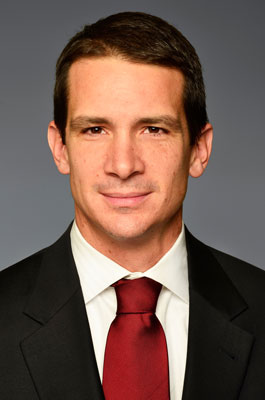


“Very few REIT management teams own that much of the stock,” McGraner noted.

Last summer, NexPoint also swapped out nearly 70 percent of its debt from floating to fixed at a rate of approximately 3.25 percent for five years.

“I think that was a crucial balance sheet move and I give NexPoint President Jim Dondero all the credit, as it was his call,” McGraner said.

Meanwhile, as for the direction of housing policy under the new Trump administration, McGraner points out that any changes Republicans seek will probably need bipartisan support.

“Housing affordability is an easy give for the administration, and you can’t have affordable housing without government-sponsored enterprises (GSEs) in some form. They are here to stay in the short term,” he said.

(Why?)
Published at Fri, 03 Feb 2017 18:30:14 +0000

REITs as Real Estate and the Trump Factor

REITs as Real Estate and the Trump Factor

In late November when REIT magazine interviewed Jerry Ehlinger, a managing director and portfolio manager with global real estate investment firm Heitman, the financial markets were only beginning to digest the impact of Republican candidate Donald Trump’s win in the 2016 presidential election. With regard to real estate investment, Ehlinger took a measured view of the GOP upstart’s unexpected victory. As for speculation about the far-reaching policy priorities of Trump and a Republican-controlled Congress, he said “change is not likely to happen quickly.”

Ehlinger talked Trump, the relationship between REITs and real estate, interest rate policy and more in the interview for the latest edition of “Capital Markets.”

REIT: “REITs are real estate.” True or false, and why?

JERRY EHLINGER: REITs are absolutely real estate. REITs are portfolios of real estate that are no different than any private real estate fund other than the mechanism for ownership and pricing. Historically, REIT returns track the value of the underlying real estate. More than 90 percent of a REIT’s value typically consists of income-producing real estate with the remaining value from real estate-related activities.

REIT: What does that mean for investors, both institutional and retail, who are trying to construct diversified portfolios?

EHLINGER: Real estate is a large and fundamental asset class alongside bonds and equities, so all investors seeking a diversified investment portfolio should include real estate.

How does one obtain a diversified portfolio of real estate? Buying the real estate directly would require billions of dollars, and there just aren’t many investors with that capacity. In fact, this is why REITs were created in the first place—to provide investors with the benefits of investing in real estate in an accessible, liquid form.

For retail investors, this is especially true, as they can invest a portion of their portfolio in real estate (via REITs) while maintaining diversification, regardless of the size of their portfolios. For institutional investors with the ability to invest directly, including REITs alongside their private real estate holdings has shown to improve performance over time while providing liquidity necessary to handle fund obligations.

REIT: Do you think portfolio managers and the investing community as a whole share your position?

EHLINGER: The majority of dedicated REIT managers, particularly ones that are part of large real estate investment platforms such as Heitman, certainly share this view. Most of them grew up in a market where institutional capital was the largest driver of REIT demand and their clients looked at it as real estate. These managers still tend to understand the long-term driver of REIT returns is the underlying real estate.

That said, the key factor necessary to understand REITs as real estate is time. Over short periods of time, the appraisal method for direct real estate can differ significantly from the public market value.

REIT: How should real estate investors look at a Donald Trump presidency? Does the political climate really affect the real estate market?

EHLINGER: Without question, anything that impacts the economy— and, therefore, demand—will impact real estate. The political decisions over the next four years are certain to impact the economy. Further, the structure of direct real estate investments and REITs are often heavily influenced by changes to tax policy, which Trump intends to focus on.

As far as how investors should look at Trump’s presidency, I would advise them to view it cautiously. The market has rallied during the first couple weeks on optimism over reduced regulation, business-friendly policy and tax changes. The reality is no one knows what the final plan will be and what campaign talking points will actually find the light of day. Ultimately, other than optimism, change is not likely to happen quickly. Tax law changes will not take effect until 2018 at the earliest, and regulation changes will likely go through some debate before they are able to impact business.

REIT: What’s your general outlook for the REIT market in 2017?

EHLINGER: The real estate market has been entering the later stages of the recovery for the last year or so. Supply is reasonable, but increasing, and rental rate growth is slowing for all but a few property types, such as industrial and data centers. Prior to the election outcome, this trend appeared the most likely to continue into 2017 as well. Post-election, the outlook appears a bit more positive, in that higher rates could slow development of new supply and we could see a slight economic bounce toward the end of 2017 and into 2018 if the Republican-controlled government can find agreement on truly stimulative policy.

REIT: Any specific sectors that are catching your eye?

EHLINGER: We are very bullish on the data center sector. The secular demand driver of increasing data storage and communication is still strong, and the infrastructure necessary to facilitate this creates a huge external growth opportunity for REITs.

REITs were created to provide investors with the benefits of investing in real estate in an accessible, liquid form.
– Jerry Ehlinger

We are also positive on the industrial sector as changing supply chains have created demand for industrial in excess of what economic activity would predict based on prior cycles. Smaller niche property types such as single-family homes, student housing and medical office buildings should also continue to perform well due to stable demand drivers and controlled supply.

REIT: Do you have a position on the relationship between rising interest rates and the performance of REITs?

EHLINGER: We have seen historically that interest rates and REIT prices are negatively correlated in the short run, particularly when rate moves are large and swift. This correlation has been most pronounced since mid-2013, where we have witnessed about a -0.3 to -0.4 correlation to the 10-Year Treasury yield.

The good news is that correlations decline in the long run as the benefits of inflation and economic growth that are typically the drivers of higher interest rates kick in. Real estate has shown to have good performance during times of rising inflation and economic growth due to an increase in replacement cost of the assets and a landlord’s ability to pass through inflation to tenants as part of the nature of leases or to push rents higher as demand increases.

Jerry Ehlinger is a managing director at global real estate investment firm Heitman, and he currently sits on the NAREIT Real Estate Investment Advisory Council. He acts as the lead portfolio manager in Heitman’s North American public real estate securities group.

(Why?)
Published at Wed, 01 Feb 2017 03:14:08 +0000

Monmouth, UMH Ready for Another 50 Years

Monmouth, UMH Ready for Another 50 Years

Eugene Landy recalls attending a meeting back in the 1960s at which a Federal Reserve economist talked about a new way to invest in real estate.

“The Federal Reserve thought that large pools of capital would be good for the economy—bring new office buildings, industrial [properties], residential buildings,” he recounts. “REITs [created in 1960] would allow small investors to invest in real estate and provide capital for needed projects.”

The meeting got Landy’s attention. In 1968, he created industrial-focused REIT Monmouth Real Estate Investment Corp. (NYSE: MNR) and residential REIT UMH Properties, Inc. (NYSE: UMH).

Five decades later, the REIT pioneer still serves as the chairman of both Freehold, N.J.-based companies.

Setting the Course

As Monmouth and UMH both continued to grow, Landy eventually recruited his sons, Michael and Sam, to oversee the companies. “Eugene grew the companies steadily and conservatively and then successfully transitioned day-today management to Mike and Sam,” says Craig Kucera, a REIT analyst with Wunderlich Securities.

Sam, a lawyer by training, worked as an attorney for other manufactured housing community owners before giving up his law practice and joining UMH, which owns, operates and finances manufactured home communities, in 1987. He’s now the president and CEO of UMH, which went public in 1985.

Michael took a more circuitous route to the C-suite at Monmouth, which has been a publicly traded company since its founding. After starting his career in the music industry, he joined his father’s industrial REIT and obtained a graduate degree in real estate investment from New York University.

AT A GLANCE
Address:
3499 Route 9 North
Freehold, NJ 07728
Phone: 732.577.9996
Websites: mreic.reit & umh.reit
Management Team:
Eugene Landy Chairman of the Board Monmouth Real Estate Investment Corp. & UMH Properties, Inc.
Michael Landy President and CEO Monmouth Real Estate
Samuel Landy President and CEO UMH Properties
Kevin Miller Chief Financial Officer Monmouth Real Estate
Anna Chew Chief Financial Officer UMH Properties

Between the three Landys, Eugene, a graduate of the United States Merchant Marine Academy, plays the role of “captain of the ship” for the two companies, according to Sam Landy.

“He lets us operate the ship, but he tells us where the ship is ultimately going,” Sam Landy says.

“Being a sailor, I learned something about the world and world trade,” Eugene Landy observes. “And I learned about running an enterprise.”

The patriarch also holds a law degree from Yale Law School. He credits the dramatic differences between the schooling at his two alma maters with helping to shape his core beliefs about running a successful company.

“When I went to law school, I learned that the important thing is to see the issues and see the problems,” Eugene Landy says. “You can try to get the answers after that, but if you don’t see the issues and the problems, you will never get the answers.”

As Michael Landy sees it, his father’s well-rounded perspectives on business and life helped teach his sons how to expand the opportunities available to the companies.

“So many people treat every transaction like a zero-sum game, but I’ve certainly learned from him that it’s not,” Michael Landy says of his father.

Five Decades in the Making

Eugene Landy and his sons have taken a patient approach to building up the two companies.

Today, Monmouth’s portfolio includes 99 properties in 30 states, encompassing more than 16 million square feet. UMH owns 101 manufactured home communities with about 18,100 developed sites.

However, Eugene Landy never loses sight of the many market cycles he has navigated in his career. For example, he remembers back in the 1970s that even though his companies were Equity REITs, they were tarred with the same brush as construction-oriented Mortgage REITs. As Mortgage REITs fell into waves of defaults, banks wanted their loans paid back. That forced the elder Landy to sell good properties and shrink the portfolios of both companies.

In the 1980s, interest rates skyrocketed as Federal Reserve Chairman Paul Volcker sought to fight inflation. Yet, it wasn’t all bad news for UMH as high mortgage rates steered some would-be home buyers to UMH Properties.

The lessons learned during the Volcker era are still guiding Eugene Landy today. “We’re living in a world right now where we think inflation is not present, but it comes on you so fast that people don’t realize how quickly you see inflation impact your business,” he says.

Since then, UMH has faced other sector-specific hurdles. Approvals for building new manufactured homes aren’t always easy to acquire. The financing market for prospective buyers of UMH Properties has hit rough patches. As a result, the company has gradually shifted more of its efforts toward rental activities.

Meanwhile, Monmouth leveraged a solid relationship with logistics giant FedEx. Robert Stevenson, a Janney Montgomery Scott analyst, points out that the industrial REIT currently owns 7 percent of the FedEx Ground Network in the U.S. In response to past concerns from Monmouth’s board of directors, the company has sought to mitigate concentration risk from its FedEx business by expanding its universe of tenants.

Being Prepared

In addition to reflecting on the companies’ golden anniversaries, Eugene Landy is also looking ahead to the next 50 years for UMH and Monmouth.

First and foremost, he says he hopes that his family remains involved in the management of both companies. He values the longevity inherent in a business where there is less turnover from executives leaving a company after a few years to go on to the next project.

Whoever is at the helm of UMH and Monmouth, Eugene Landy says they must always focus on staying in the good graces of the capital markets.

“You have to keep your REIT at no more than 50 percent leverage, you have to keep a lot of liquidity, you have to keep clean bank relationships,” Eugene Landy says.

Also, it is essential for any executive to be prepared—for what they know is coming and, more importantly, what is unforeseen.
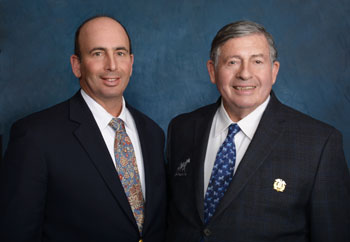
“You have to be able to withstand whatever economic storm comes—and there’s always a new one,” he says.

Monmouth Looks for Payoff from Panama Canal Expansion

The expansion of the Panama Canal, which has boosted container traffic at East Coast ports, will potentially create heightened demand for Monmouth’s industrial space, according to CEO Michael Landy. The REIT is projecting that online sales will cross $500 billion in 2017, another positive for space uptake. Furthermore, according to its CEO, Monmouth also has an acquisition pipeline of about 3 million square feet with merchant builders, most of which will come online in 2017.

The good news for Monmouth doesn’t end there, according to Kucera of Wunderlich Securities. He expects the company will attain an investment- grade rating in 2017, allowing it to acquire more favorable terms for its debt.

UMH Holds Trump Card

UMH CEO Sam Landy says he expects UMH to continue to benefit from solid rental demand in 2017. He anticipates that adding another 800 rental units to UMH’s inventory will boost 2017 revenue by $6.4 million. Additionally, hiking up rents by 4 percent will add $3 million more in revenue, according to UMH.

In the long term, UMH’s CEO also sees the REIT’s exposure to natural gas-producing regions as a positive, especially considering that President Donald Trump is not anti-fracking. Furthermore, Trump’s proposal to soften the Dodd-Frank regulations on financial activities could help the REIT improve its capital structure. The regulations have been a drag on UMH’s business, he says.

“Instead of us balancing risk by accepting greater down payments, we must decline sales because customers do not meet government-imposed lending standards,” Sam Landy says.

(Why?)
Published at Wed, 01 Feb 2017 03:47:36 +0000