American Tower Executive Says Boards Must Ensure Management is Informed on Tax Matters

American Tower Executive Says Boards Must Ensure Management is Informed on Tax Matters

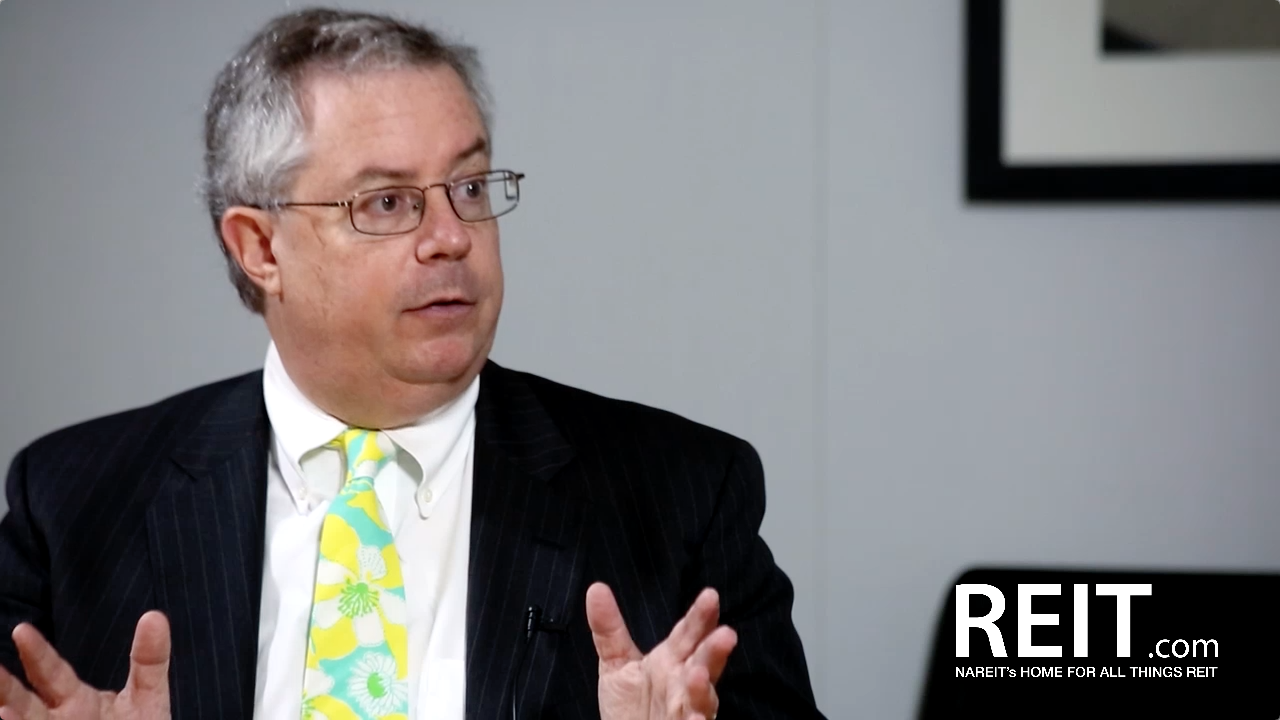
Ed DiSanto, executive vice president, chief accounting officer and general counsel at American Tower Corp. (NYSE: AMT), joined REIT.com for a video interview at REITWise 2017: NAREIT’s Law, Accounting & Finance Conference in La Quinta, California.

DiSanto observed that a company’s board of directors has a fiduciary obligation to guide the company, but that obligation must be tailored to the nature of the business.

In 2017, the challenge for boards is to make sure that the management team is in tune with all of the developments surrounding tax reform, DiSanto said. “There has to be extra communication this year,” he noted.

DiSanto pointed out that executive boards also face independent pressure to perform at a higher level from sources such as monitoring bodies and activist investors.

DiSanto also discussed legal barriers to developing the necessary infrastructure to meet increased digital demand.

(Why?)

Published at Thu, 11 May 2017 12:52:05 +0000

Watson Land Company’s New CEO on the Industrial REIT’s Future

Watson Land Company’s New CEO on the Industrial REIT’s Future

In the latest episode of The REIT Report: NAREIT’s Weekly Podcast, Jeffrey Jennison discussed his transition into the role of CEO of private industrial REIT Watson Land Company.

Bruce Choate served as Watson’s CEO from 2003 until his retirement in March. Watson announced this week that Jennison, who has been the company’s president since 2014, would officially add CEO to his title.

Jennison said Watson had enjoyed a smooth transfer in leadership. Jennison and Choate worked closely in the last three years.

“It has been a seamless process, and we have a really experienced management team,” Jennison noted.

Choate began to step away from heavy involvement in Watson’s decision-making process in the middle of 2016, according to Jennison, who described the period as a “loose transition” in preparation for Choate formally stepping down.

In terms of Jennison’s vision for the company, he said Watson will remain primarily focused on the Southern California market.

“While we are looking to expand and diversify into other markets over time, that’s a strategic endeavor, but at the same time, it’s not at the expense of our long history in Southern California,” Jennison commented.

That doesn’t mean Watson will avoid opportunities outside the Southern California footprint. The company has already set up operations in Pennsylvania’s Lehigh Valley, for example.

Jennison also discussed how Watson’s 200-year history influences its company culture today. In particular, Watson appreciates the long-term perspective, according to Jennison.

“We feel a tremendous amount of responsibility to our communities,” he said. “Our history guides us each and every day.”

(Subscribe to The REIT Report via iTunes.)

(Why?)

Published at Wed, 10 May 2017 15:14:56 +0000

Health Care REITs Sabra and Care Capital to Merge in $7.4 Billion Deal

Health Care REITs Sabra and Care Capital to Merge in $7.4 Billion Deal

Sabra Health Care REIT, Inc. (Nasdaq: SBRA) and Care Capital Properties, Inc. (NYSE: CCP) said May 7 that they will combine in an all-stock merger to create a company with a pro forma total market capitalization of $7.4 billion.

The new company will operate under the Sabra name. Sabra’s current management team, led by Chairman and CEO Rick Matros, will run the combined company. Ray Lewis, CEO of CCP, will join Sabra’s board of directors.

The equity market capitalization of the new company is estimated at $4.3 billion. The deal is expected to close in the third quarter.

In a May 8 conference call, Lewis said CCP had considered a number of different strategic alternatives “and this was the best path forward for the company.” Matros said the two companies had been in discussions for “some time.”

At the end of 2016, Sabra’s portfolio consisted of 97 skilled nursing/transitional facilities, 85 senior housing facilities and one acute care hospital. Care Capital was spun off from Ventas, Inc. (NYSE: VTR) in mid-2015 as a pure-play REIT focused on the skilled nursing market.

Under the terms of the agreement, CCP shareholders will receive 1.123 shares of Sabra common stock for each share of CCP common stock they own. Upon closing of the merger, Sabra shareholders are expected to own approximately 41 percent, while the former CCP shareholders are expected to own approximately 59 percent of the combined company.

“Transformative” Transaction

Matros described the transaction as “transformative,” bringing increased scale and portfolio diversification.  Furthermore, a stronger balance sheet and earnings profile will position the new company “to capitalize on the opportunity set in front of us in an industry that continues to have attractive fundamentals,” he added.

Chad Vanacore, a REIT analyst at Stifel Financial Corp., said the transaction benefits both parties. While Sabra shares have performed well, he said, the company lacked scale and diversification. Meanwhile, CCP shares had “struggled to gain traction” following the spin-off from Ventas, according to Vanacore, and the company was in need of portfolio repositioning.

Matros said the overall strategy of the combined company will be to continue to concentrate on private pay residents.

Turning to skilled nursing, Matros observed that there are some “really interesting deals out there.” Sabra is currently in the process of divesting assets leased to skilled nursing operator Genesis Healthcare.

Matros said that excluding Genesis, the company’s skilled nursing statistics are “really good.” He described Sabra’s ability to identify strong operators as “advantageous” and said the company will pursue deals with operators that fit this profile.

Vanacore added that while the new company will have strong leadership in place, the major challenge post-merger will be renegotiating or exiting the underperforming leases that are currently a large portion of CCP’s portfolio.

(Why?)

Published at Mon, 08 May 2017 16:47:46 +0000

Hudson Pacific Properties Completes Purchase of Hollywood Studio

Hudson Pacific Properties Completes Purchase of Hollywood Studio

Hudson Pacific Properties, Inc. (NYSE: HPP) said May 2 it completed the $200 million acquisition of Hollywood Center Studios, its third purchase of a historic Hollywood asset.

The 15-acre media and entertainment campus, which consists of 13 stages, production offices and support space, will be renamed Sunset Las Palmas. The site is located near Hudson Pacific’s two existing Hollywood studios, Sunset Gower and Sunset Bronson Studios.

“The acquisition of Sunset Las Palmas Studios significantly expands the media and entertainment segment of our business,” said Victor Coleman, Hudson Pacific chairman and CEO. He noted that the addition of Sunset Las Palmas means Hudson Pacific is now the largest independent owner-operator of sound stages in the United States.

Sunset Las Palmas’ original stages and bungalows were built in 1919 by Jasper Johns, a former associate of Charlie Chaplin. Since that time, the studio has been home to iconic television shows like I Love Lucy, The Addams Family and Jeopardy. Current clients include MTV, Comedy Central and Disney.

Coleman said the purchase will allow Hudson Pacific to meet growing demand from traditional and streaming media companies. The transaction will create significant long-term shareholder value, according to Coleman, through “proactive management, economies of scale, unparalleled industry relationships and capital investment.”

During a first quarter earnings call, Bill Humphrey, general manager of Hudson Media Properties, said the company is looking to convert existing short-term leases to multi-stage, multi-year deals. He noted that Hudson Pacific is currently negotiating “some rather large deals” at Sunset Las Palmas.

(Why?)

Published at Fri, 05 May 2017 13:04:15 +0000

Student Housing REIT EdR Restores UC Berkley Residential College to Gothic Glory

Student Housing REIT EdR Restores UC Berkley Residential College to Gothic Glory

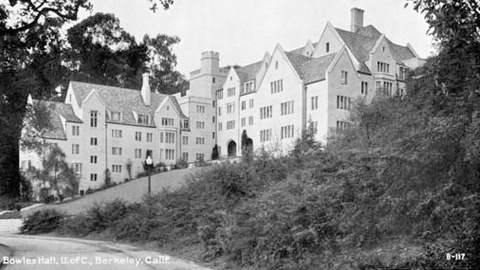
Dominating a steep hillside on the University of California at Berkeley campus, Bowles Hall’s imposing collegiate gothic architecture creates a classic academic scene. Complete with gabled roofs, square turret, wood-paneled rooms and fireplaces, the structure readily draws comparisons to Harry Potter’s fictitious boarding school, Hogwarts.

Bowles Hall first opened its doors in 1929 to 102 male student residents, offering a self-governing, residential college community where students could live, dine and study for all four years at UC Berkeley. Modeled on the residential colleges of Oxford and Cambridge, Bowles Hall is thought to be the first residential college established in the United States. Today, it is listed on the National Register of Historic Places.
For student housing REIT EdR (NYSE: EDR), being selected to oversee the renovation of the community, which had been slumped in a gradual decline over decades, was a one-of-a kind opportunity. Tom Trubiana, president of Memphis-based EdR, says that while the company had been involved in renovations before, nothing was as “historic or grand” as what it undertook with Bowles Hall.

Change Comes in the ‘70’s

Things started to change for Bowles Hall by the 1970’s. It lost its self-governing status and became a university-managed facility with admission by lottery. Dining facilities closed in 2000. By 2005, only freshmen students were housed there.

Trubiana explains that UC Berkeley was considering alternative uses for Bowles Hall, including converting it into a hotel or office building. At that point, a group of Bowles Hall alumni banded together to try to convince the university to allow them to raise capital and find partners to restore the building to its original purpose.

In 2009, the alumni, organized as the Bowles Hall Foundation, secured support from the UC Berkeley Academic Senate to pursue their goal. That same year, EdR was brought onto the project. The student housing REIT began the process of arranging financing and hiring architects and a general contractor. Trubiana says EdR also worked closely with underwriter Raymond James to finance the $37 million project with 35-year, tax-exempt bonds.

The UC Board of Regents approved the restoration plan in March 2014. Work started in June 2015 and was completed in August 2016, 17 days ahead of schedule and $600,000 under budget, according to Trubiana.

Maintaining Integrity of 1928 Design

Steve Schnoor, EdR’s senior vice president of western development, says one of the primary objectives of the project was to “maintain the integrity of the original 1928 design while bringing it into the 21st century.”

Some of the challenges included new seismic reinforcement and systems infrastructure, life safety improvements, and an entirely new layout of the residential units based on current codes and standards. All rooms were converted to single or double residences, each with an ensuite bathroom.

In addition to restoring Bowles Hall’s dining facilities, the renovation project encompassed the building’s historic library and lounge. A new fitness center and game room were also added.

Doors Open to 183 Co-Ed Students

By the end of August 2016, Bowles Hall had welcomed back 183 undergraduate co-ed residents, plus in-residence faculty and graduate student advisors. The renovated hall is equipped with 37 single rooms and 73 double rooms and boasts state-of-the-art  technology and support, according to Trubiana.

The entire renovation conforms to Historic Building Code requirements, Trubiana says. He points out that EdR will remain connected to the project by serving as the building’s property manager.

“Bowles Hall has been such a vital part of the lore and the educational experience at UC Berkeley. Thanks to the work done here, Bowles will resume its role as both a center for academic achievement, but also a hub where lifelong memories and friendships are made,” Trubiana says.

(Why?)

Published at Thu, 04 May 2017 16:30:46 +0000

REIT Returns Flat in April

REIT Returns Flat in April

REITs returns ended flat in April as investor uncertainty late in the month diminished earlier gains, market watchers said.

 The total returns of the FTSE NAREIT All REITs Index gained 0.5 percent in April, while the S&P 500 posted a return of 1.0 percent. Total returns of the FTSE/NAREIT All Equity REITs Index gained 0.4 percent in April. The FTSE NAREIT Mortgage REITs Index produced a total return of 3.5 percent. The yield on the 10-year Treasury note dropped 0.1 percent for the month.

Brad Case, NAREIT senior vice president for research and industry information, noted that the final numbers for April are not indicative of how REITs performed for most of the month.

“Mostly it was a month of good news for REITs, then right at the end of the month, it turned negative,” Case said.

Meanwhile, Roy Shepard, senior analyst at Edward Jones, said the REIT market’s performance in April was indicative of a “volatile” earnings season.

“There were some disappointing results for some companies that, at least to me, indicates that maybe we’re getting later in the [real estate] cycle,” Shephard said.

Turning to individual property sectors, Case noted that April was a month “with some real disparities.”

Data center REITs led the industry with returns of 5.9 percent in April. Industrial REITs followed close behind with returns of 5.5 percent.

Mortgage REITs performed well, Case said, especially those that provide financing for home mortgages.

Retail REIT returns, however, dropped 4.0 percent during the month. Case pointed out that investors are still working to determine which retail real estate owners are best positioned to manage the disruption in the retailing business.

“The market has to sort out who owns the real estate that’s going to be affected by retail weakness and who is going to be more resilient,” Case said.  He added that because retail REITs typically own high-quality assets, they “have less to worry about” than many retail real estate owners.

Looking more broadly, Case said he expects the steady improvement in macroeconomic fundamentals to continue. Case also noted that REITs continue to offer strong dividend yields, while the industry overall trades at a “fairly significant discount.”

(Why?)

Published at Mon, 01 May 2017 17:55:45 +0000

Uncertainty Surrounds SEC Proposals, Lawyer Says

Uncertainty Surrounds SEC Proposals, Lawyer Says

David Slotkin, a partner at Morrison & Foerster LLP, joined REIT.com for a video interview at REITWise 2017: NAREIT’s Law, Accounting & Finance Conference in La Quinta, California.

Slotkin participated in a REITWise panel discussion on Securities and Exchange Commission (SEC) legal issues.

Slotkin said an SEC proposal on universal ballots is likely to “go by the wayside for the next four years, at least.”

Meanwhile, uncertainty surrounds SEC proposals on CEO pay ratios, according to Slotkin.

“The first concern is whether it will get abolished under the new administration,” Slotkin said.

In case the pay ratio law does remain intact, companies are working to ensure they capture the right compensation data, Slotkin said.

REITs, many of which might have temporary, part-time or seasonal workers, are contemplating providing alternate ratios in addition to the required ratio, Slotkin noted. He added that REITs with international operations face additional questions surrounding how international employees factor into the pay ratio calculations.

Turning to SEC clawback proposals, Slotkin said he is advising clients not to make changes if they already have a clawback policy in place. “It’s considered fairly likely that the proposed clawback rule will be done away with,” he said.

(Why?)

Published at Mon, 01 May 2017 15:14:53 +0000

Mortgage Delinquencies Lower Than Projected, Analyst Says

Mortgage Delinquencies Lower Than Projected, Analyst Says

In the latest episode of The REIT Report: NAREIT’s Weekly Podcast, Manus Clancy, senior managing director at Trepp, discussed the latest developments in the commercial mortgage market.

Clancy offered his thoughts on the so-called wall of maturities, which refers to the high volume of loans issued in 2006 and 2007 that are now coming due. He noted that whereas market watchers once expected between 25 and 50 percent of these loans would end up defaulting, the ultimate default rate should be less than 20 percent.

“We’ve outperformed to the upside in terms of things turning out better than people would have thought,” Clancy said.

However, refinancing loans in some sectors is proving to be challenging, according to Clancy. These include retail and suburban office properties.

Trepp’s data indicate that the overall delinquency rate on commercial mortgages has turned upwards in the last 12 months. Clancy said that is to be expected as these loans approach their dates of maturity.

“We always knew that there would be some loans that would muddle through, some that would pay off in full, even early, and some that would be left behind and struggle to refinance,” Clancy said. He reiterated that the increase in delinquencies represented “a fraction” of what was once expected.

“The fact that it has only moved up a point is moderately bullish for the market and certainly something that investors who own pieces of these mortgages can cheer about,” Clancy remarked.

In terms of stories to watch in the coming months, Clancy cited interest rates, which still remain favorable for borrowers.

(Subscribe to The REIT Report via iTunes.)

(Why?)

Published at Fri, 28 Apr 2017 15:42:38 +0000

Accounting Expert Highlights New Revenue Recognition Standard

Accounting Expert Highlights New Revenue Recognition Standard

Wyndham Smith, Jr., a partner at Deloitte LLP, joined REIT.com for a video interview at REITWise 2017: NAREIT’s Law, Accounting & Finance Conference in La Quinta, California.

Smith commented on the converged revenue recognition standard issued by the Financial Accounting Standards Board’s (FASB) and the International Financial Reporting Standard (IFRS).  Companies can elect early adoption of the standard in 2017. It will take effect for public companies in 2018 and non-public companies in 2019.

According to Smith, the impact of the standard on REITs may not be as significant as for companies in other industries. He noted that the typical rental stream for REITs is governed by other guidance that lies outside the scope of the revenue recognition standard.

However, Smith said attention is being paid to the interplay between the revenue recognition standard and the new leasing standard that goes into effect a year later. Specifically, the focus is on the requirement under the leasing standard to segregate the lease and non-lease components in a lease contract, he said.

Smith noted that the revenue recognition standard also gives guidance on the derecognition of non-financial assets, or the sale of real estate. A sales contract will need to be evaluated relative to the new revenue guidance to determine when control of the asset has transferred from the seller to the buyer, he said. That will indicate when a sale should be recognized, he added, and determine the value of the sale when it is ultimately recorded.

Meanwhile, Smith said the increased use of non- Generally Accepted Accounting Principles (GAAP) reporting measures shows that users of financial statements are looking elsewhere to get the information needed for investment decisions. According to Smith, FASB is considering a project that would look at improvements to the income statement and statement of cash flows. “That could be a good use of FASB’s time,” he said.

(Why?)

Published at Thu, 27 Apr 2017 19:24:00 +0000

Assurance Expert Outlines Impact of FASB Definition of Business Standard on REITs

Assurance Expert Outlines Impact of FASB Definition of Business Standard on REITs

Jennifer Hillenmeyer, a partner in national assurance at EY, joined REIT.com for a video interview at REITWise 2017: NAREIT’s Law, Accounting & Finance Conference in La Quinta, California.

Prior to her current position at EY, Hillenmeyer completed a two-year fellowship at the Financial Accounting Standards Board (FASB). While there, she worked on two standards of particular significance to REITs.

Hillenmeyer discussed the two standards, which cover the definition of a business and the derecognition of non-financial assets, in depth. She noted they will have a “significant impact” on REITs.

Regarding the definition of a business standard, it creates a threshold stating that if substantially all of the value of an acquisition is concentrated in a single asset or group of similar assets, then the transaction is not considered to be a business.

“When applying the threshold, FASB was really thinking a lot about real estate transactions,” Hillenmeyer said. She noted that exceptions exist whereby the purchase of a single building can be combined with the land and an in-place lease to create a single asset, and it won’t be considered a business. Today, if there is an in-place lease, almost all real estate transactions are considered a business, she explained.

(Why?)

Published at Wed, 26 Apr 2017 17:13:18 +0000