

4 Quick Questions with Wendy Mann, CEO of Crew Network

4 Quick Questions with Wendy Mann, CEO of Crew Network

How would you characterize the advances made by women in the field of commercial real estate today?

There are many, many successful women in commercial real estate today. In many instances, their success is due to their ability to network, continually learn, be resilient, and possibly because they’ve had a terrific mentor.

Having said that, there are barriers that do keep women from ascending into some of the C-suite leadership roles. Companies need to ensure that there’s compensation equity. That’s an important part of our education efforts.

Companies should also be consciously identifying high-potential women and grooming them for greater roles in senior management. I believe it’s become more critical for companies to reflect their clients, and diversity is no longer a nice-to-have, but a must-have at all levels. It’s been proven that companies are more successful when they have men and women at the leadership helm.

As you take over the helm at CREW, what are some of the items on your to-do list?

My specific areas of pursuit will include expanding our business network globally, increasing the number of members who give and get business through the CREW network, elevating the value of our leadership program, and delivering practical research for companies to eliminate gender bias and advance more women in leadership roles.

On the global front, in April we did a major launch initiative with CREW UK, an affiliate group to CREW Network. We see the U.K., affiliate as the first step in our efforts to build a global network.

On the education front, how is CREW working to groom future commercial real estate leaders?

At the high school level we’ve designed a program, CREW Careers, which is a hands-on Real Estate 101 classroom program designed to introduce high school girls to the many career opportunities available to them in the commercial real estate industry.

At the college level, we have UCREW. UCREW sessions are hosted each spring and fall by CREW Network chapters who utilize their members as role models to teach students networking fundamentals, offer powerful career resources and provide relationship-building opportunities in career development.

In 2016, CREW Network Foundation, our organization’s charitable arm, awarded $75,000 in scholarships to young women pursuing careers in commercial real estate. Recipients also receive a paid summer internship opportunity and registration to the annual CREW Network Convention and Marketplace, which provides real-world experience and valuable industry networking. To date, CREW Network and our Foundation have awarded 91 of these scholarships.

Is there any advice you were given earlier in your career that has served you well?

Over the course of a 30-year career,  I’ve worked for a number of exceptional leaders. There was a CEO when I was in my twenties who was always encouraging me and giving me ways to succeed. He’d look at me and say, “Wendy, I have 25 ideas a day. If one of them sticks, I’m happy.”

I’ve always kept that in mind because he taught me about entrepreneurial spirit and I think it has served me well – to always be seeking what is needed by your members or customers and then to deliver it.

Wendy Mann became CEO of Commercial Real Estate Women (CREW) Network and president of CREW Network Foundation in February. CREW Network members include more than 10,000 professionals worldwide and represent nearly all disciplines of commercial real estate.

(Why?)

Published at Mon, 22 May 2017 17:08:29 +0000

Longtime Analyst Predicts REITs Will Own Growing Share of Real Estate Market

Longtime Analyst Predicts REITs Will Own Growing Share of Real Estate Market

In the latest episode of The REIT Report: NAREIT’s Weekly Podcast, veteran REIT analyst Steve Manaker, formerly a managing director with Oppenheirmer & Co., reflected on the changes in the REIT industry during his career.

According to Manaker, the most significant change that he has seen during his time as a REIT analyst is a shifting focus among management teams from short-term goals to sustained growth over market cycles. The change has led to better underwriting and stronger balance sheets, he said.

Manaker also discussed the general impressions of REITs and REIT-based real estate investment among investors and the public. “Overall, I’d say the general understanding is okay right now, but there’s always room for improvement,” he commented.

According to Manaker, “disconnects” in investors’ understanding of REITs tend to show up if they are uncomfortable with either direct real estate investment or investing in stocks. As for misperceptions about REITs, Manaker noted that misguided interpretations of the relationship between REIT performance and interest rates remain in the market today. He disputed the idea of “a natural law that says REITs are going to be interest rate sensitive.” Instead, Manaker said he believes REIT returns are more correlated to the commercial real estate cycle.

Manaker was asked about the traits of the most effective REIT management teams that he encountered. “When you’re buying REITs, you’re obviously buying the assets, but I think, even more so, you’re buying the management teams,” he said. Manaker said the top management teams have the capability to adjust their portfolios over the course of market cycles.

“Over decades, things change,” he said. “What was a good piece of real estate 20 years ago might not be a good piece of real estate today.”

Manaker also cited the ability for management teams to access a broad range of information from their companies. That includes not only investing in analytics, but putting resources into data collection, according to Manaker.

In terms of the REIT industry’s future, Manaker said he expects that REITs will own a growing share of the commercial real estate market in the United States.

(Subscribe to The REIT Report via iTunes.)

(Why?)

Published at Thu, 18 May 2017 18:19:03 +0000

Pebblebrook Plays New Tune at Historic Nashville Hotel

Pebblebrook Plays New Tune at Historic Nashville Hotel

Nashville, Tennessee, has never been a target market for Pebblebrook Hotel Trust (NYSE: PEB), but that didn’t stop the lodging REIT from investing $52 million in a downtown hotel that was a perfect fit with the company’s strategy in every other respect.

Located inside a 19th century railroad station that is a National Historic Landmark, Nashville’s Union Station Hotel presented just the type of project Pebblebrook is on the alert for, according to CEO Jon Bortz.

“We typically like to buy hotels that are broken, that are under-utilized, under-managed and under-invested in, but are great real estate,” Bortz says.

Union Station Hotel is a 125-room, upscale, full-service hotel located on Broadway in the heart of downtown Nashville. The property first opened in 1900 as the Louisville & Nashville Railroad Station, built in the Romanesque Revival style using Tennessee limestone for the foundation and Bowling Green gray ashlar limestone for the exterior walls. The building features large semicircular arches, a clock tower topped with a statue of Mercury and an outdoor covered terrace. Above the lobby is a sixty-five-foot-high, vaulted, stained glass ceiling.

After passenger train service ended in Nashville in the 1970s, the building deteriorated. The metropolitan government of Nashville and Davidson County acquired the property in 1985, and it was converted to a hotel in 1986.  Pebblebrook acquired the property at the end of 2014 and maintained the hotel’s association with Marriott’s Autograph Collection.

Bortz says he was immediately drawn to the building’s “spectacular” architecture, yet he was acutely aware that the hotel’s guestrooms, meeting spaces and public areas were not in the same league as the splendor in which they were housed. Pebblebrook recognized an opportunity to make Union Station Hotel into a top destination for business, leisure and social events by matching the quality of the hotel interior with its grand exterior, according to the CEO.

Melding the Historic with the Contemporary

Part of the vision for the hotel, Bortz explains, was to celebrate Nashville and meld the old historic architecture with new contemporary furnishings. To achieve that fusion, Pebblebrook commissioned modern artwork that highlighted Nashville’s roots, but was in keeping with the new look of the hotel.

“In a city already filled with creativity, we are curating a distinctive, authentic Nashville experience,” says Michael Nelson, the hotel’s general manager. “The hotel entices trend-setting travelers with an adventurous spirit who are seeking distinctive hotels as part of their travel experience,” he adds.

Some of the commissioned artwork includes an eight-foot guitar, a country band atop an old baggage cart and a giant horse statue. All are made of recycled metals. “It’s very powerful art,” Bortz says.

Pebblebrook, working with Seattle-based Dawson Design Associates, also added three custom-made 10-foot chandeliers to the grand ceiling in the main hall. “The idea of the chandeliers was to bring some contemporary sparkle and elegance to the main room and to bring the 65-foot ceiling down to a human scale,” according to Bortz.

As for the guestrooms, upgrades included walnut feature walls, cowhide headboards, leather accents, and contemporary artwork and amenities. The total cost for the hotel’s refurbishment was $15.5 million. It was completed in October 2016 after 12 months of work, during which the hotel remained open.

Bortz says local reaction to the renovation has been “tremendous.” In turn, Pebblebrook works hard to make Union Station an integral part of the local community. It regularly hosts events open to the public. The hotel is also a regular stop on any guided tour of the city, he points out.

 “That’s really our general philosophy as a firm – appeal to the locals, and the out-of-towners will follow,” Bortz explains.

(Why?)

Published at Tue, 16 May 2017 19:43:46 +0000

Accounting Expert Outlines Impact of FASB Hedge Accounting Proposals on REITs

Accounting Expert Outlines Impact of FASB Hedge Accounting Proposals on REITs

Robert Barton, vice president of accounting advisory at Chatham Financial, joined REIT.com for a video interview at NAREIT’s headquarters in Washington, D.C.

Barton recently participated on a panel at REITWise 2017: NAREIT’s Law, Accounting & Finance Conference in La Quinta, California.

Barton commented on recent Financial Accounting Standards Board (FASB) developments, including proposed changes to the hedge accounting standard.

For REITs, the biggest change from the proposal would be that the measure of ineffectiveness is going away, according to Barton.

“This has been a significant burden on a lot of REITs, so this simplification of this standard will really benefit most REITs,” Barton said, as they will not have to separately record and state ineffectiveness in their earnings.

Barton pointed out that the actual test of effectiveness will now simply be applied only at inception for perfectly effective swaps.

Barton observed that the FASB hedge accounting standard proposal will not result in changes to hedge documentation, the assessment of effectiveness, regression testing or many of the other main building blocks of the hedge accounting standard.

Meanwhile, Barton said that based on conversations with FASB staff, January 2018 is looking likely to be the early adoption date for the standard. In considering whether REITs should consider early adoption, REITs should consider how “painful” ineffectiveness has been to their profit and loss account in the past, he noted.

(Why?)

Published at Thu, 11 May 2017 14:50:29 +0000

American Tower Executive Says Boards Must Ensure Management is Informed on Tax Matters

American Tower Executive Says Boards Must Ensure Management is Informed on Tax Matters

Ed DiSanto, executive vice president, chief accounting officer and general counsel at American Tower Corp. (NYSE: AMT), joined REIT.com for a video interview at REITWise 2017: NAREIT’s Law, Accounting & Finance Conference in La Quinta, California.

DiSanto observed that a company’s board of directors has a fiduciary obligation to guide the company, but that obligation must be tailored to the nature of the business.

In 2017, the challenge for boards is to make sure that the management team is in tune with all of the developments surrounding tax reform, DiSanto said. “There has to be extra communication this year,” he noted.

DiSanto pointed out that executive boards also face independent pressure to perform at a higher level from sources such as monitoring bodies and activist investors.

DiSanto also discussed legal barriers to developing the necessary infrastructure to meet increased digital demand.

(Why?)

Published at Thu, 11 May 2017 12:52:05 +0000

Watson Land Company’s New CEO on the Industrial REIT’s Future

Watson Land Company’s New CEO on the Industrial REIT’s Future

In the latest episode of The REIT Report: NAREIT’s Weekly Podcast, Jeffrey Jennison discussed his transition into the role of CEO of private industrial REIT Watson Land Company.

Bruce Choate served as Watson’s CEO from 2003 until his retirement in March. Watson announced this week that Jennison, who has been the company’s president since 2014, would officially add CEO to his title.

Jennison said Watson had enjoyed a smooth transfer in leadership. Jennison and Choate worked closely in the last three years.

“It has been a seamless process, and we have a really experienced management team,” Jennison noted.

Choate began to step away from heavy involvement in Watson’s decision-making process in the middle of 2016, according to Jennison, who described the period as a “loose transition” in preparation for Choate formally stepping down.

In terms of Jennison’s vision for the company, he said Watson will remain primarily focused on the Southern California market.

“While we are looking to expand and diversify into other markets over time, that’s a strategic endeavor, but at the same time, it’s not at the expense of our long history in Southern California,” Jennison commented.

That doesn’t mean Watson will avoid opportunities outside the Southern California footprint. The company has already set up operations in Pennsylvania’s Lehigh Valley, for example.

Jennison also discussed how Watson’s 200-year history influences its company culture today. In particular, Watson appreciates the long-term perspective, according to Jennison.

“We feel a tremendous amount of responsibility to our communities,” he said. “Our history guides us each and every day.”

(Subscribe to The REIT Report via iTunes.)

(Why?)

Published at Wed, 10 May 2017 15:14:56 +0000

Health Care REITs Sabra and Care Capital to Merge in $7.4 Billion Deal

Health Care REITs Sabra and Care Capital to Merge in $7.4 Billion Deal

Sabra Health Care REIT, Inc. (Nasdaq: SBRA) and Care Capital Properties, Inc. (NYSE: CCP) said May 7 that they will combine in an all-stock merger to create a company with a pro forma total market capitalization of $7.4 billion.

The new company will operate under the Sabra name. Sabra’s current management team, led by Chairman and CEO Rick Matros, will run the combined company. Ray Lewis, CEO of CCP, will join Sabra’s board of directors.

The equity market capitalization of the new company is estimated at $4.3 billion. The deal is expected to close in the third quarter.

In a May 8 conference call, Lewis said CCP had considered a number of different strategic alternatives “and this was the best path forward for the company.” Matros said the two companies had been in discussions for “some time.”

At the end of 2016, Sabra’s portfolio consisted of 97 skilled nursing/transitional facilities, 85 senior housing facilities and one acute care hospital. Care Capital was spun off from Ventas, Inc. (NYSE: VTR) in mid-2015 as a pure-play REIT focused on the skilled nursing market.

Under the terms of the agreement, CCP shareholders will receive 1.123 shares of Sabra common stock for each share of CCP common stock they own. Upon closing of the merger, Sabra shareholders are expected to own approximately 41 percent, while the former CCP shareholders are expected to own approximately 59 percent of the combined company.

“Transformative” Transaction

Matros described the transaction as “transformative,” bringing increased scale and portfolio diversification.  Furthermore, a stronger balance sheet and earnings profile will position the new company “to capitalize on the opportunity set in front of us in an industry that continues to have attractive fundamentals,” he added.

Chad Vanacore, a REIT analyst at Stifel Financial Corp., said the transaction benefits both parties. While Sabra shares have performed well, he said, the company lacked scale and diversification. Meanwhile, CCP shares had “struggled to gain traction” following the spin-off from Ventas, according to Vanacore, and the company was in need of portfolio repositioning.

Matros said the overall strategy of the combined company will be to continue to concentrate on private pay residents.

Turning to skilled nursing, Matros observed that there are some “really interesting deals out there.” Sabra is currently in the process of divesting assets leased to skilled nursing operator Genesis Healthcare.

Matros said that excluding Genesis, the company’s skilled nursing statistics are “really good.” He described Sabra’s ability to identify strong operators as “advantageous” and said the company will pursue deals with operators that fit this profile.

Vanacore added that while the new company will have strong leadership in place, the major challenge post-merger will be renegotiating or exiting the underperforming leases that are currently a large portion of CCP’s portfolio.

(Why?)

Published at Mon, 08 May 2017 16:47:46 +0000

Hudson Pacific Properties Completes Purchase of Hollywood Studio

Hudson Pacific Properties Completes Purchase of Hollywood Studio

Hudson Pacific Properties, Inc. (NYSE: HPP) said May 2 it completed the $200 million acquisition of Hollywood Center Studios, its third purchase of a historic Hollywood asset.

The 15-acre media and entertainment campus, which consists of 13 stages, production offices and support space, will be renamed Sunset Las Palmas. The site is located near Hudson Pacific’s two existing Hollywood studios, Sunset Gower and Sunset Bronson Studios.

“The acquisition of Sunset Las Palmas Studios significantly expands the media and entertainment segment of our business,” said Victor Coleman, Hudson Pacific chairman and CEO. He noted that the addition of Sunset Las Palmas means Hudson Pacific is now the largest independent owner-operator of sound stages in the United States.

Sunset Las Palmas’ original stages and bungalows were built in 1919 by Jasper Johns, a former associate of Charlie Chaplin. Since that time, the studio has been home to iconic television shows like I Love Lucy, The Addams Family and Jeopardy. Current clients include MTV, Comedy Central and Disney.

Coleman said the purchase will allow Hudson Pacific to meet growing demand from traditional and streaming media companies. The transaction will create significant long-term shareholder value, according to Coleman, through “proactive management, economies of scale, unparalleled industry relationships and capital investment.”

During a first quarter earnings call, Bill Humphrey, general manager of Hudson Media Properties, said the company is looking to convert existing short-term leases to multi-stage, multi-year deals. He noted that Hudson Pacific is currently negotiating “some rather large deals” at Sunset Las Palmas.

(Why?)

Published at Fri, 05 May 2017 13:04:15 +0000

Student Housing REIT EdR Restores UC Berkley Residential College to Gothic Glory

Student Housing REIT EdR Restores UC Berkley Residential College to Gothic Glory

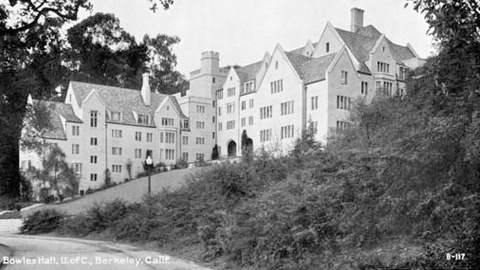
Dominating a steep hillside on the University of California at Berkeley campus, Bowles Hall’s imposing collegiate gothic architecture creates a classic academic scene. Complete with gabled roofs, square turret, wood-paneled rooms and fireplaces, the structure readily draws comparisons to Harry Potter’s fictitious boarding school, Hogwarts.

Bowles Hall first opened its doors in 1929 to 102 male student residents, offering a self-governing, residential college community where students could live, dine and study for all four years at UC Berkeley. Modeled on the residential colleges of Oxford and Cambridge, Bowles Hall is thought to be the first residential college established in the United States. Today, it is listed on the National Register of Historic Places.

For student housing REIT EdR (NYSE: EDR), being selected to oversee the renovation of the community, which had been slumped in a gradual decline over decades, was a one-of-a kind opportunity. Tom Trubiana, president of Memphis-based EdR, says that while the company had been involved in renovations before, nothing was as “historic or grand” as what it undertook with Bowles Hall.

Change Comes in the ‘70’s

Things started to change for Bowles Hall by the 1970’s. It lost its self-governing status and became a university-managed facility with admission by lottery. Dining facilities closed in 2000. By 2005, only freshmen students were housed there.

Trubiana explains that UC Berkeley was considering alternative uses for Bowles Hall, including converting it into a hotel or office building. At that point, a group of Bowles Hall alumni banded together to try to convince the university to allow them to raise capital and find partners to restore the building to its original purpose.

In 2009, the alumni, organized as the Bowles Hall Foundation, secured support from the UC Berkeley Academic Senate to pursue their goal. That same year, EdR was brought onto the project. The student housing REIT began the process of arranging financing and hiring architects and a general contractor. Trubiana says EdR also worked closely with underwriter Raymond James to finance the $37 million project with 35-year, tax-exempt bonds.

The UC Board of Regents approved the restoration plan in March 2014. Work started in June 2015 and was completed in August 2016, 17 days ahead of schedule and $600,000 under budget, according to Trubiana.

Maintaining Integrity of 1928 Design

Steve Schnoor, EdR’s senior vice president of western development, says one of the primary objectives of the project was to “maintain the integrity of the original 1928 design while bringing it into the 21st century.”

Some of the challenges included new seismic reinforcement and systems infrastructure, life safety improvements, and an entirely new layout of the residential units based on current codes and standards. All rooms were converted to single or double residences, each with an ensuite bathroom.

In addition to restoring Bowles Hall’s dining facilities, the renovation project encompassed the building’s historic library and lounge. A new fitness center and game room were also added.

Doors Open to 183 Co-Ed Students

By the end of August 2016, Bowles Hall had welcomed back 183 undergraduate co-ed residents, plus in-residence faculty and graduate student advisors. The renovated hall is equipped with 37 single rooms and 73 double rooms and boasts state-of-the-art  technology and support, according to Trubiana.

The entire renovation conforms to Historic Building Code requirements, Trubiana says. He points out that EdR will remain connected to the project by serving as the building’s property manager.

“Bowles Hall has been such a vital part of the lore and the educational experience at UC Berkeley. Thanks to the work done here, Bowles will resume its role as both a center for academic achievement, but also a hub where lifelong memories and friendships are made,” Trubiana says.

(Why?)

Published at Thu, 04 May 2017 16:30:46 +0000

REIT Returns Flat in April

REIT Returns Flat in April

REITs returns ended flat in April as investor uncertainty late in the month diminished earlier gains, market watchers said.

 The total returns of the FTSE NAREIT All REITs Index gained 0.5 percent in April, while the S&P 500 posted a return of 1.0 percent. Total returns of the FTSE/NAREIT All Equity REITs Index gained 0.4 percent in April. The FTSE NAREIT Mortgage REITs Index produced a total return of 3.5 percent. The yield on the 10-year Treasury note dropped 0.1 percent for the month.

Brad Case, NAREIT senior vice president for research and industry information, noted that the final numbers for April are not indicative of how REITs performed for most of the month.

“Mostly it was a month of good news for REITs, then right at the end of the month, it turned negative,” Case said.

Meanwhile, Roy Shepard, senior analyst at Edward Jones, said the REIT market’s performance in April was indicative of a “volatile” earnings season.

“There were some disappointing results for some companies that, at least to me, indicates that maybe we’re getting later in the [real estate] cycle,” Shephard said.

Turning to individual property sectors, Case noted that April was a month “with some real disparities.”

Data center REITs led the industry with returns of 5.9 percent in April. Industrial REITs followed close behind with returns of 5.5 percent.

Mortgage REITs performed well, Case said, especially those that provide financing for home mortgages.

Retail REIT returns, however, dropped 4.0 percent during the month. Case pointed out that investors are still working to determine which retail real estate owners are best positioned to manage the disruption in the retailing business.

“The market has to sort out who owns the real estate that’s going to be affected by retail weakness and who is going to be more resilient,” Case said.  He added that because retail REITs typically own high-quality assets, they “have less to worry about” than many retail real estate owners.

Looking more broadly, Case said he expects the steady improvement in macroeconomic fundamentals to continue. Case also noted that REITs continue to offer strong dividend yields, while the industry overall trades at a “fairly significant discount.”

(Why?)

Published at Mon, 01 May 2017 17:55:45 +0000