

Kimco’s Approach Evolves at Wilde Lake Village Center

Kimco’s Approach Evolves at Wilde Lake Village Center

The closure of a supermarket in Columbia, Maryland, more than 10 years ago forced Kimco Realty Corp. (NYSE: KIM) to take a fresh look at the retail-only strategy for its shopping centers.

Now, the site of the shuttered grocery store embodies the retail REIT’s efforts to turn some of its outdated, but well-located, real estate into mixed-use developments.

“Our focus is true value creation inside the real estate we have, and that may deviate from pure retail alone,” says Tom Simmons, president of Kimco’s mid-Atlantic region.
Village Centers Bought in 2002

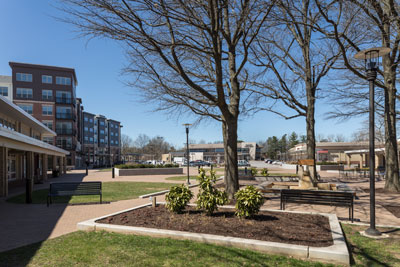
Fifty-year-old Wilde Lake Village Center, a seven-acre site, is one of nine village centers located within the city of Columbia, a planned community situated between Washington, D.C., and Baltimore. Kimco purchased Wilde Lake and six other Columbia village centers in 2002 from The Rouse Co., a firm founded by real estate developer and urban planner James Rouse.

Wilde Lake was the first of the village centers built by Rouse and reflected his “inward-facing” community concept, Simmons explained. With a village green at its heart, the center was designed to fulfill all of the adjacent community’s daily needs, with office, retail and recreational components.

The closure in 2006 of Wilde Lake’s Giant supermarket, an original tenant, prompted Kimco to begin a thorough review of the village center. Ultimately, the REIT discovered that there wasn’t enough national grocery retailer interest in the site due to competition from nearby village centers, especially those that had been designed with a more traditional shopping center layout.

At that point, Kimco opted to pursue a mixed-use approach at Wilde Lake.

An Exhaustive Entitlement Process

Redevelopment of Wilde Lake began in 2013. The process included the demolition of the Giant store and portions of the smaller, inward-facing retail sites. A new CVS drugstore was constructed, while organic grocer and original tenant David’s Market was relocated to a new, larger site.

The LEED-certified redevelopment added freshly-paved walking paths, outdoor seating areas and community space. New landscaping throughout the center enhanced the existing vegetation, along with stamped concrete walkways and crosswalks, and pervious paver parking spaces.
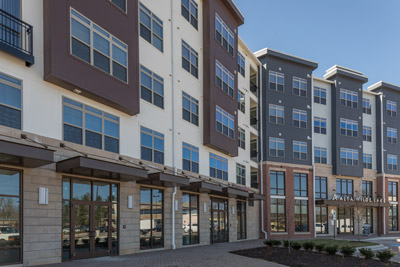
For the multifamily aspect of the redevelopment, Kimco selected Wood Partners to build two five-story apartment buildings and a multi-level parking garage.

Before redevelopment could start, however, Kimco faced an exhaustive entitlement process, Simmons noted.

To start with, the Rouse Co. still maintained overriding control over a change-in-use at the center. By the time Kimco started the process, the Rouse Co. had been sold to GGP (NYSE: GGP), then spun off into The Howard Hughes Corp. (NYSE: HHC). Kimco worked with both companies, which were “very receptive to the ideas we had,” Simmons said.

At the same time, the village centers did not have any sort of means to change the zoning in order to convert the original concept, he added.

To overcome that hurdle, Kimco sat down with county officials and the village’s civic leadership in a “laborious” two-year process to write legislation allowing for zoning changes to be made, according to Simmons.
In January, Kimco announced that it had signed three new leases at Wilde Lake. Starbucks is opening both a café and a drive-thru in the fall. Kimco also signed a lease with Dynamic Dental Care LLC, a Washington-area practice that opened its Columbia office in December 2016. A site for Salons by JC, a national beauty salon chain, is scheduled to open in the early fall of 2017 above David’s Natural Market.

Now that Kimco has completed the $18 million redevelopment at Wilde Lake, it is studying its options at other Columbia village centers.

“Not everyone wants a lot of change, but the success at Wilde Lake really opens doors for us to potentially be able to change some, if not all, of our village centers,” Simmons said. “Wilde Lake is the poster child of how you can take something that through no fault of its own is broken, and turn it into a true showpiece.”

(Why?)

Published at Fri, 14 Apr 2017 16:44:47 +0000

Litt Says Activist Investors Interested in More Than Short-Term Returns

Litt Says Activist Investors Interested in More Than Short-Term Returns

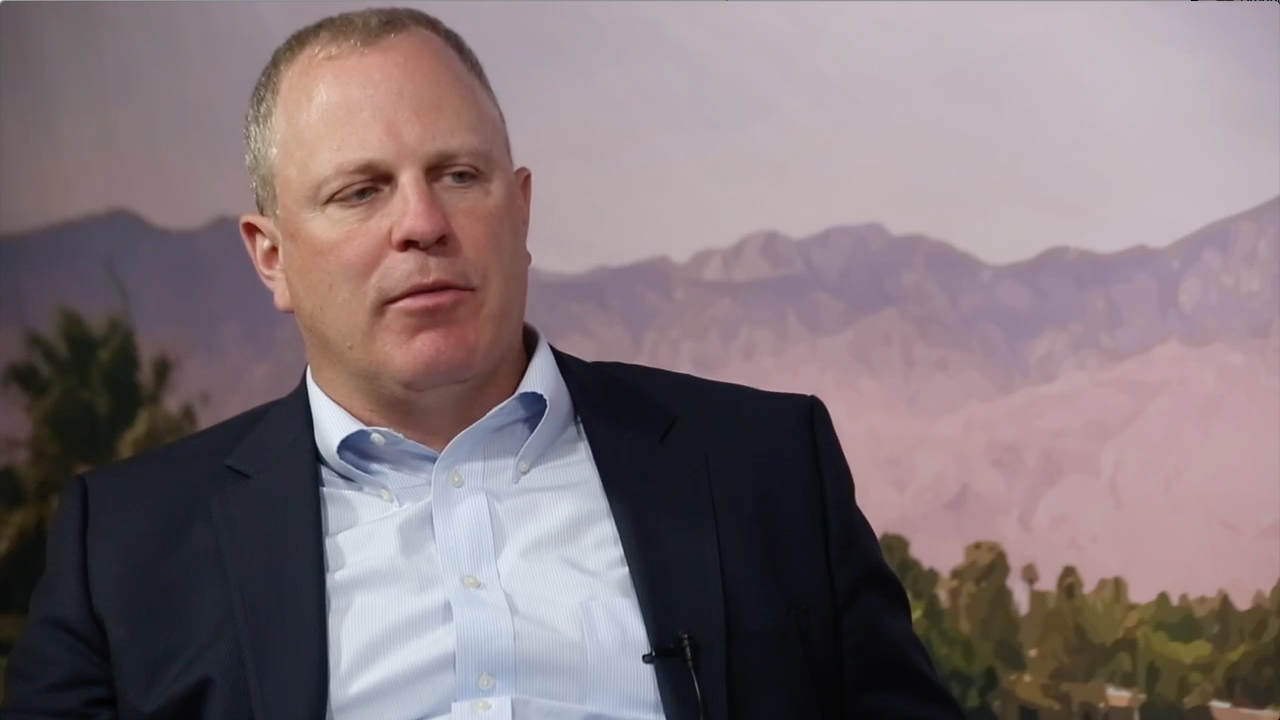
Jonathan Litt, founder and chief investment officer at Land and Buildings, joined REIT.com for a video interview at REITWise 2017: NAREIT’s Law, Accounting & Finance Conference in La Quinta, California.

Litt described the approach Land and Buildings takes to boost shareholder value at companies where it invests. Typically, Land and Buildings invests in companies it believes are trading at a material discount to the underlying value of the assets, Litt said. Land and Buildings then focuses on aspects of a company it believes can be fixed, such as capital allocation, margins, operating strategy and culture, he said.

Litt also countered the view that activist investors are only concerned with short-term results.

“As we’ve engaged with companies over the years, there are easy, short-term ways to make money which are not the best outcome for all shareholders. We’ve stuck with companies and pursued the best strategy that maximizes value over the long term. If it means staying in a stock three, four years, we will do that,” he said.

Meanwhile, Litt pointed out that overall REIT governance has “improved quite appreciably.”  He praised the industry’s ability to attract capital and generate attractive returns during the past three decades, and said he expects that will remain the case going forward.

(Why?)

Published at Wed, 12 Apr 2017 12:47:00 +0000

FASB Leases Standard to Offer Clearer View of Corporate Liability, Analyst Says

FASB Leases Standard to Offer Clearer View of Corporate Liability, Analyst Says

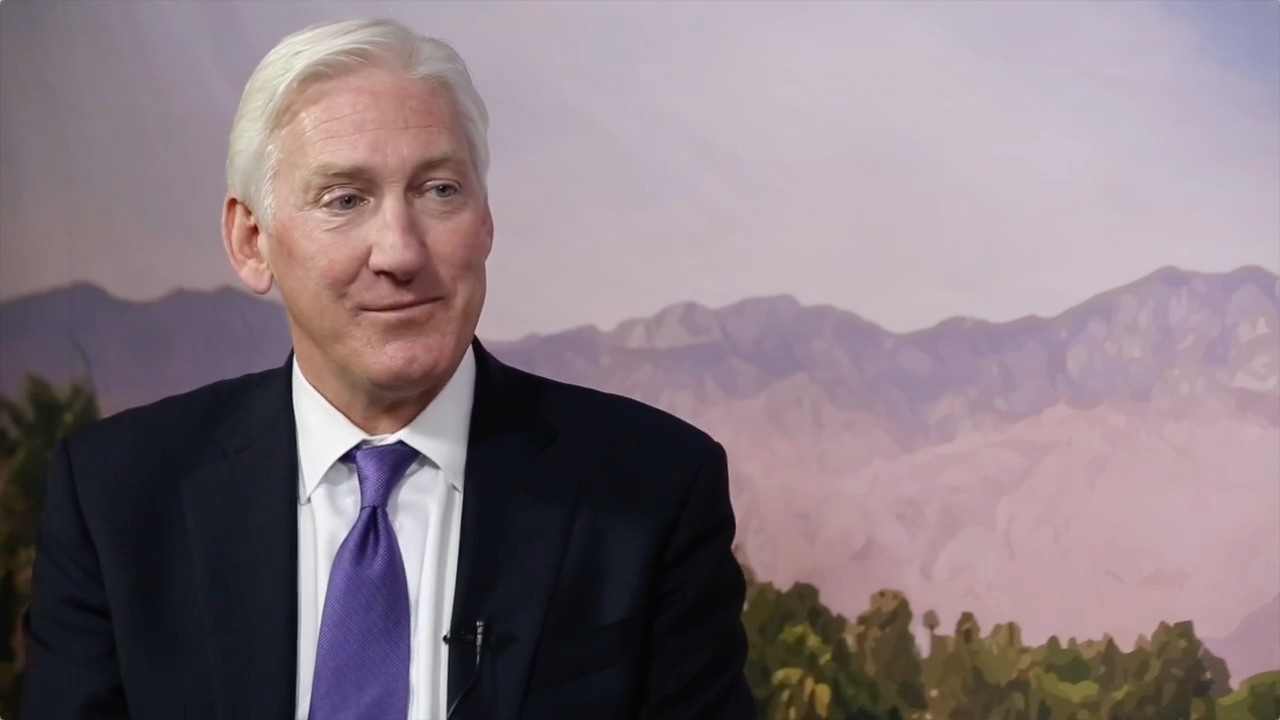
Ross Prindle, managing director and practice leader in the real estate advisory group of Duff & Phelps, joined REIT.com for a video interview at REITWise 2017: NAREIT’s Law, Accounting & Finance Conference in La Quinta, California.

Prindle participated in a REITWise panel discussion on the Financial Accounting Standards Board’s (FASB) new lease accounting standard. According to Prindle, the main objective of the standard is to get all leases onto companies’ balance sheets so that investors can better determine their actual liabilities.

While the new standard is not expected to change lessor accounting, lessors are going to have to be mindful of steps taken by lessees to manage their own balance sheets, Prindle said. Prindle said he expects to see “a little bit of pull and tug” between lessors and lessees, which will evolve more once the standard goes into effect in 2019.

In terms of implementation, Prindle stressed that the first priority for companies is to gather all the data they have concerning their leases. This means data not only for real estate and equipment, but contracts that may qualify as leases in the standard, he noted.

(Why?)

Published at Tue, 11 Apr 2017 18:50:58 +0000

Green Street’s Sullivan Questions Pricing Declines in Retail Real Estate

Green Street’s Sullivan Questions Pricing Declines in Retail Real Estate

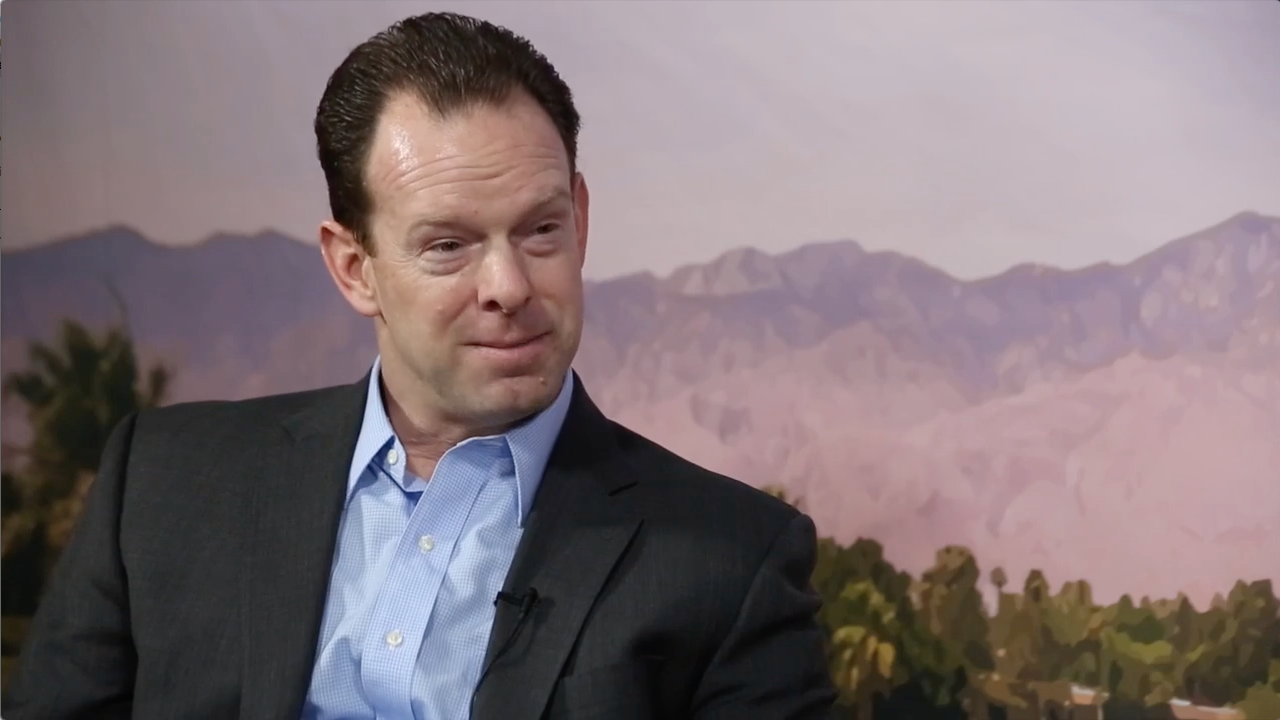
Jim Sullivan, president of advisory and consulting at Green Street Advisors, joined REIT.com for a video interview at REITWise 2017: NAREIT’s Law, Accounting & Finance Conference in La Quinta, California.

Sullivan discussed some of the key trends impacting the retail real estate segment. Green Street’s advisory group currently spends about half its time working with retailers, retail real estate owners and investors in commercial mortgage-backed securities bonds that are typically collateralized by malls, Sullivan said.

Sullivan stressed that although retail has always been a competitive business, today’s pace of change is much more rapid than ever before. The abundance of news stories focusing on the sector reflects e-commerce’s impact on retailers that haven’t been able to adjust their business models to compete effectively, he said.

Meanwhile, Sullivan pointed out that despite the headwinds facing retail at this time, a number of tailwinds do exist. He pointed to record-high occupancy rates in the mall segment and occupancies in strip centers that are near record highs.

“The occupancy story is attractive,” Sullivan said. The lack of new supply is another positive factor for the sector, he noted.

Sullivan also highlighted that fewer stores closed in 2016 than in 2015.

Sullivan said he has some questions about public market valuations for the retail real estate segment. With “great mall companies” trading at up to a 25 percent discount to the private market value of their assets, “you have to wonder if the public market is appropriately valuing the headwinds and the tailwinds,” Sullivan said. It’s possible that negative headlines have pushed down pricing too far, he said.

(Why?)

Published at Tue, 11 Apr 2017 15:15:41 +0000

Zell Sees Possibility of “Extra Innings” in Current Real Estate Cycle

Zell Sees Possibility of “Extra Innings” in Current Real Estate Cycle

REIT pioneer Sam Zell says the latest iteration of the real estate cycle might last longer than usual.

Speaking April 6 at a NYU Schack Institute symposium on the REIT industry, Zell, the chairman of Equity Group Investments, LLC, commented that the “suppression of growth over the last eight years might mean that we play extra innings this time.”

“Corporate America has more capital on its balance sheet than ever before,” he added. “There’s a lot of dry powder.”

Zell also said he has no qualms about potential interest rate hikes because the current low-rate environment imposes no penalty for deferring investment decisions.

Zell noted that he wasn’t sure he sees a direct correlation between higher interest rates and a decline in real estate values.

Jonathan Gray, head of global real estate at The Blackstone Group private equity firm, told the NYU symposium that while he expects to see more privatizations in the REIT sector, any pick-up in activity will likely be triggered by “sharp upward movements in interest rates.”

Meanwhile, Zell said, the residential sector continues to benefit from a number of years of under-building triggered by the financial crisis. Construction of single-family homes totaled about 1 million per year between 1985 and 2005. It dropped to a level of about 400,000 homes at the height of the financial crisis, Zell said. Today, construction stands at about 600,000 homes per year, he said.

“You’d think that after eight years of recovery…that you’d be back to 2005 levels,” Zell noted.

(Why?)

Published at Mon, 10 Apr 2017 17:45:07 +0000

NYSE Official Says REIT IPO Market Off to Active Start in 2017

NYSE Official Says REIT IPO Market Off to Active Start in 2017

Ron Bohlert, sector leader of the real estate and insurance group at the New York Stock Exchange (NYSE), joined REIT.com for a video interview at REITWise 2017: NAREIT’s Law, Accounting & Finance Conference in La Quinta, California.

Bohlert commented that 2017 is off to a “really active start” in terms of initial public offering (IPO) activity. Three REITs have listed on the NYSE so far this year – the IPO of home rental company Invitation Homes Inc. (NYSE: INVH) in January, followed by Clipper Realty Inc. (NYSE: CLPR) and Sachem Capital Corp. (NYSE: SACH) in February. He pointed out that the Invitation Homes offering is the second-largest REIT IPO on record.

Bohlert also discussed the first-ever REIT Investor Relations Symposium, to be held on June 5 at the NYSE. The invitation-only event will be co-sponsored by NAREIT and the NYSE and will allow IR professionals to exchange ideas and best practices, he noted.

The symposium will include:

  • A panel discussion with veteran REIT analysts talking about how they digest the information coming from listed companies;
  • A panel on REIT market structure , including the role of the designated market maker in supporting equity trading and
  • A panel of REIT CFOs explaining what they view as a successful IR program within their companies.

(Why?)

Published at Mon, 10 Apr 2017 17:37:01 +0000

REIT Rules and Regulations Outlined in REITWise Tax Primer Session

REIT Rules and Regulations Outlined in REITWise Tax Primer Session

Kenneth Betts, partner at Winston & Strawn LLP, joined REIT.com for a video interview at REITWise 2017: NAREIT’s Law, Accounting & Finance Conference in La Quinta, California.

Betts highlighted some of the issues raised during a REITWise REIT Tax Primer panel discussion.

The panel looked at REIT asset and income requirements. Betts pointed out that at least 75 percent of a REIT’s assets must be related to real property, while at least 75 percent of its gross income for each tax year must come from real estate-related sources such as rents from real property.

In terms of organizational requirements, Betts explained that REITs must have 100 or more shareholders and five or fewer individuals may not own more than 50 percent of the outstanding stock.

Betts also highlighted aspects of the Umbrella Partnership (UPREIT) model.

(Why?)

Published at Mon, 10 Apr 2017 14:46:44 +0000

Retail REIT CEOs Address Shifts in Sector

Retail REIT CEOs Address Shifts in Sector

Retail REIT executives say they continue to see solid growth potential in their sector, despite disruptive forces that are changing the operating landscape.

Speaking April 6 at a NYU Schack Institute symposium, executives sought to counter the impression that the entire retail REIT sector is facing pressure as the retail business has been hit with a wave of national store closings.

Sandeep Mathrani, CEO of GGP (NYSE: GGP), said the biggest issue for retail REITs is the quality of their real estate. “If you invest in the best real estate, you will thrive,” he said. Mathrani stressed that GGP is currently at full occupancy and that the pipeline of retailers wanting high-quality property is “very deep.”

Benjamin Schall, president and CEO of Seritage Growth Properties (NYSE: SRG), observed that a number of retailers are actually growing. He noted that the company, which is the real estate spinoff of Sears Holding Corp., has been “extremely active” in repurposing former Sears properties.

Jeffrey Olson, chairman and CEO of Urban Edge Properties (NYSE: UE), said that when the company was spun off from Vornado Realty Trust (NYSE: VNO) in 2015, its portfolio occupancy rate was 96 percent. Today, it is in excess of 98 percent, he said.

Hap Stein, Jr., chairman and CEO of shopping center REIT Regency Centers Corp. (NYSE: REG), noted that while the retail sector has always been subject to disruption, “this time it is different.” Technological changes and e-commerce advances are forcing retailers to rethink their strategies, he said. As an example, Stein pointed to grocery retailers allowing customers to order online and pick up at their stores.

Craig McNab, outgoing chairman and CEO of National Retail Properties (NYSE: NNN), pointed out that retail REITs have “plenty of capacity” on their balance sheets. If financing conditions become more difficult, he said, REITs that are better managed will be well-positioned to take advantage of acquisition opportunities.

Online Retailers Setting Up Shop

One of the biggest changes in the retail segment is coming from companies that originate online, according to Mathrani. They’re now starting to open brick-and-mortar stores because they provide the most efficient way to get products to customers, he said.

Stein added that going forward, more successful retailers will pursue a dual approach that marries technology and brick-and-mortar storefronts. Well-located shopping centers will serve as a “relevant” distribution channel for these sellers, he said.

Blackstone’s Jonathan Gray says Retail Facing “Serious Headwinds”

Major investors who appeared at the NYU event shared mixed opinions on the state of the retail real estate market. Sherry Rexroad, co-global chief investment officer at BlackRock Global Real Estate Securities, said she worries that “all retail is being lumped together…it’s not one-size-fits-all.”

Similarly, Theodore Bigman, head of global listed real assets investing at Morgan Stanley, said he thought the retail narrative of the last few months had been “overdone.”

Cohen & Steers Executive Vice President Jon Cheigh, however, said his firm is “still relatively negative” on retail as the number of viable malls decreases each year. One major factor behind the trend has been the huge jump in smartphone penetration, according to Cheigh. At the same time, he said more retailers are coming to grips with the need to shutter stores.

Jonathan Gray, global head of real estate at The Blackstone Group private equity firm, commented that although retail real estate faces “serious headwinds,” Blackstone foresees a range of different outcomes in the sector. Two retail segments that the firm favors are grocery-anchored shopping centers and infill retail sites, according to Gray.

Amid the changing retail landscape, Gray said a clear beneficiary has emerged: industrial real estate. Companies that specialize in logistics properties are seeing increased demand for space as a result of the e-commerce’s growth, according to Gray.

“It’s hard not to be enthusiastic around logistics, in particular, around this last mile,” Gray said.

(Why?)

Published at Mon, 10 Apr 2017 13:29:08 +0000

PwC Expert Highlights Potential Tax Reform Changes REITs Should Consider

PwC Expert Highlights Potential Tax Reform Changes REITs Should Consider

4/7/2017 | By Sarah Borchersen-Keto

Adam Feuerstein, national real estate tax technical leader at PwC, joined REIT.com for a video interview at REITWise 2017: NAREIT’s Law, Accounting & Finance Conference in La Quinta, California.

Feuerstein commented on some of the issues that REITs should consider regarding potential comprehensive tax reform. Those issues include:

  • Direct tax impacts;
  • What happens to REIT taxable income;
  • REIT distribution requirements;
  • Shareholder taxation; and
  • The impact on real estate generally, including real estate values and financing and interest rates.

Some of the possible changes from tax reform that are getting particular attention are the potential loss of interest deduction and section 1031 like-kind exchanges, Feuerstein noted.

Feuerstein also discussed some of the main tax issues for subsidiary REITs.

Categories: 

(Why?)

Published at Fri, 07 Apr 2017 18:20:24 +0000

As Retail Struggles, Analyst Says Upgrades Key for Success

As Retail Struggles, Analyst Says Upgrades Key for Success

In the latest episode of The REIT Report: NAREIT’s Weekly Podcast, senior REIT analyst Alexander Goldfarb of Sandler O’Neill + Partners, L.P. offered his observations on the impact of recent retail store closings on mall and shopping center REITs.

Goldfarb noted that the business of retail constantly evolves. As such, the latest wave of store closings isn’t unique in the industry’s history, he commented.

“The stores that we all grew up with at the mall 20, 30, 40 years ago are completely different from what the stores are today,” he said. “Retail concepts come and go.”

Currently, retail is gravitating towards what Goldfarb termed as “more productive centers” that also offer experiences in addition to shopping. He noted that despite the growth of online shopping, consumers continue to visit malls and shopping centers. Most of the shopping centers that are struggling now were already having problems with vacancies, according to Goldfarb.

Goldfarb pointed out that in the current environment, retail real estate owners will need to spend more capital on property upgrades to stay competitive. “If you can’t get an uptick in rent, but you still need to spend to maintain occupancy, that’s going to compress margins.”

In light of current valuations, Goldfarb said he doesn’t see any consolidation of retail REITs on the immediate horizon.

(Subscribe to the NAREIT Podcast via iTunes.)

(Why?)

Published at Thu, 06 Apr 2017 18:19:05 +0000