Inland Real Estate Sees Increased Competition in Secondary, Tertiary Markets

Inland Real Estate Sees Increased Competition in Secondary, Tertiary Markets

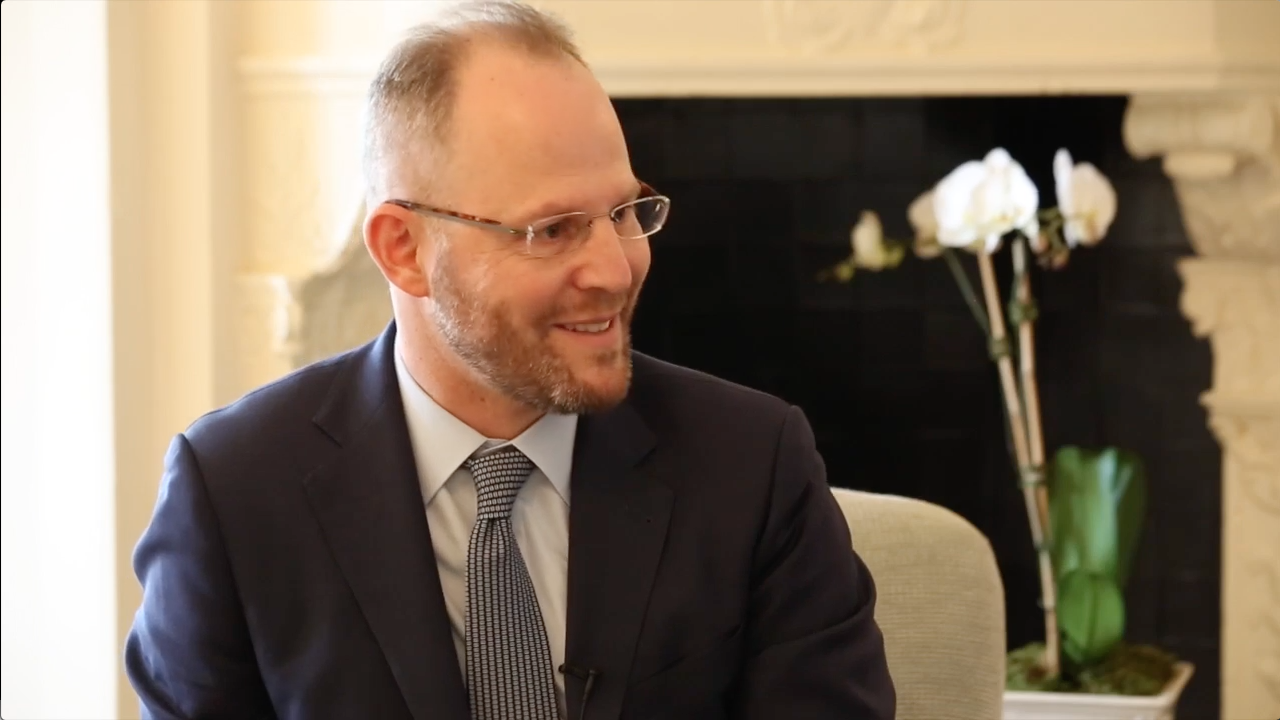
Mitchell Sabshon, president and CEO of Inland Real Estate Investment Corp., joined REIT.com for a CEO Spotlight video interview at NAREIT’s 2017 Washington Leadership Forum at The Hay-Adams.

Inland sponsors non-listed REITs and private securities products.

Sabshon said conditions across most property types, especially in secondary and strong tertiary markets, remain firm. In fact, competition is increasing.

“With yields still being relatively tight, we’ve seen a number of competitors, mostly institutional investors, coming into those secondary and tertiary markets where we haven’t really seen them much before,” he said.

Inland continues to favor grocery-anchored and shadow-anchored retail in secondary and tertiary markets. “That’s certainly where we’re focusing our attention for 2017,” Sabshon noted.

Sabshon also commented on tax reform.

“Nothing is currently more important than the 1031 like-kind exchange provisions of the internal revenue code,” Sabshon said. “We happen to think that 1031 has been a fundamental part of real estate investing,” he added.

(Why?)

Published at Fri, 17 Mar 2017 17:55:37 +0000

Generation Gaps

Generation Gaps

It is a parental obligation to frequently remind your children how much more difficult life was when you were growing up. When I tell my three kids stories about life B.I. (before the internet), I am usually met with some combination of eye rolls and exasperated sighs. Some struggles just don’t transfer across generational gaps.

Like any good dad, I have my children brainwashed to root for the same sports teams I do. As I was agonizing (and perhaps cursing) every play while the New England Patriots dug themselves a seemingly insurmountable hole in the Super Bowl, my oldest daughter turned to me as calm as could be and said, “Don’t worry, they’ll come back. That’s what they do.”

My first reaction was to disown her for insulting the gods of sports karma, but then I realized this was just another generational difference. To my children, rooting for Boston-based sports teams is to cheer for a winner, a perennial favorite. They know nothing of the agony and heartache so many generations before endured. At 13, my oldest daughter has already seen nine major sports championships roll through Beantown in her lifetime. My 75-year-old father, on the other hand, was convinced he had a better chance of walking to the moon than seeing the Red Sox or Patriots as anything but cursed.

Time—and, of course, success—can go a long way toward changing the perception about anything. Take REITs for example. The notion that REITs would have an equity market capitalization around $1 trillion or that more than 70 million Americans would rely on REITs as a core part of their retirement portfolios would have seemed beyond wishful thinking to the industry’s forefathers.

The story about REITs has fundamentally changed. The days of being thought of as a little-known alternative investment are gone. By providing strong returns and solid income over time, REITs have earned the reputation they now have as the most effective and efficient way to invest in real estate.

Recognition of that fact can be seen in many ways, from changes in the Global Industry Classification Standard to the reality that the U.S. REIT approach to real estate investment is being emulated in 35 countries. Well-known companies like Hilton Worldwide and Darden Restaurants are spinning off their real estate holdings into REITs to unlock the value of those assets for shareholders. You can read about them in profiles of Park Hotels & Resorts (NYSE: PK) and Four Corners Property Trust (NYSE: FCPT) in this issue of the magazine.

Now that the perception has changed, the onus is on REIT management teams, as well as NAREIT, to continue to preserve and perfect the REIT way of real estate investment. After all, who knows what the next generation may hold.

(Why?)

Published at Thu, 16 Mar 2017 21:07:38 +0000

Apartment REIT Equity Residential Focusing on Core Coastal Markets

Apartment REIT Equity Residential Focusing on Core Coastal Markets

David Neithercut, CEO of Equity Residential (NYSE: EQR), joined REIT.com for a CEO Spotlight video interview at NAREIT’s 2017 Washington Leadership Forum at The Hay-Adams.

During 2016, Equity Residential sold 98 consolidated apartment properties for approximately $6.8 billion.

Neithercut described the transactions as a “great strategic move” and a unique opportunity to “take advantage of a lot of money looking for multifamily assets.” The company is now focusing on its core coastal markets, he added.

Transaction volume in 2017 will be “nothing like you saw in 2016,” Neithercut said, although the company will continue to look for opportunities to recycle capital into higher-return assets.

Neithercut also commented on the impact that technology has played on virtually every aspect of how the company runs its apartment properties.

(Why?)

Published at Fri, 17 Mar 2017 16:17:45 +0000

4 Quick Questions With CohnReznick's David Kessler

4 Quick Questions With CohnReznick's David Kessler

Are you anticipating any broad shifts in the growth strategies employed by REITs?

Going forward, look for better, clearly defined portfolio strategies and external growth strategies that are less risky, along with generally more conservative financial policies.

We’re seeing REITs really hone their strategies because of a couple of things. One, you have share pricing that is either at a discount or a premium to net asset values. Two, you’re seeing some focus on shedding portfolios in certain underperforming markets and REITs taking advantage of development opportunities where they have a lower cost of capital than some of the private developers. 

Real estate investors face many unknowns at this time. Will that inhibit activity in 2017?

I think it’s going to change activity. Some of the uncertainty relates to the debt that’s available. REITs will have opportunities where non-REITs maybe have challenges. 

Given the $89 billion of commercial mortgage-backed securities (CMBS) maturing in the next 12 to 18 months, there are going to be opportunities with properties that are driven to the marketplace. 

The opportunities will be with mixed-use development. It’s a strategy that’s very popular, but difficult to finance because of the many different components. We’re seeing REITs have the ability to either work in a joint-venture structure to create big mixed-use developments, or on a standalone basis.

We’re also going to see opportunities continuing with multifamily because the fundamentals are so strong. There are still certain markets that have enormous rent growth.

What are you anticipating in terms of REIT privatizations in 2017?

We’re going to continue to see privatizations as share prices trade at a discount to net asset value in certain sectors.  We’ll see more privatizations as opportunities for yield become much more difficult and there is so much dry powder on the sidelines in the private sector. That level of pent-up capital requires buying whole companies or entire portfolios, and REITs make obvious and desirable targets for acquisition.

In addition to private equity funds, other potential REIT acquirers include sovereign wealth funds. European funds, for example, facing low yields on properties in Europe could step up U.S. privatization bids this year.

Whether or not publicly traded REITs decide to accept offers to go private in this volatile, cash-heavy environment depends on the sometime disparate goals of both management and shareholders. If shareholders feel the company will continue to generate significant earnings growth over time, going private isn’t the best alternative for them. 

What are some of the prominent trends you expect to see this year? 

We’re going to see a focus on some secondary and tertiary markets where there are strong fundamentals.

Secondary and tertiary markets can provide niche strategies by best-in-class, laser-focused operators who will create opportunities. Some popular niche strategies include student housing, senior housing and medical office.  Allocating capital and investment to operators who are decade-long specialists in a particular sector and specific geography that has dynamic growth will be a good bet.

There are also going to be opportunities in the workforce housing space. B- and C-class multifamily properties have largely been neglected. Raising rents as appropriate, and acquiring these properties at a significant discount to high-end multifamily, will provide opportunities for yield.

David Kessler is a partner with accounting, tax and advisory firm CohnReznick and serves as national director of the firm’s commercial real estate industry practice. 

(Why?)

Published at Thu, 16 Mar 2017 15:37:04 +0000

Fundamentals Supporting Real Estate Demand “Quite Solid”

Fundamentals Supporting Real Estate Demand “Quite Solid”

The latest episode of The REIT Report: NAREIT’s Weekly Podcast features a conversation with John Worth, NAREIT’s senior vice president for research and investor outreach. Worth is taking part in a session at REITWise 2017: NAREIT’s Law, Accounting & Finance Conference that will assess the state of the real estate market. He will be joined on the panel by Calvin Schnure, NAREIT’s senior vice president for research and economic analysis, and Green Street Advisors Director of U.S. REIT Research Cedrik Lachance.

According to Worth, the participants will first focus on the broad economic outlook before drilling down to discuss the implications for commercial real estate and REITs. Additionally, the panelists will offer their thoughts on some of the major trends in the real estate industry, such as the effects of e-commerce on the retail sector.

“Obviously, that is creating a situation where retailers are reshaping their businesses,” he said. “REITs are doing some interesting things in terms of making sure they are where the customer wants to be in the future.”

In terms of the broad economic outlook, Worth said the fundamentals supporting the demand side of the real estate market as “quite solid.” They include steady GDP growth, low unemployment and monthly payroll gains. Worth also noted that labor force participation and wages are rising slowly.

“All of those conditions should be very supportive in terms of demand for use of commercial real estate,” Worth said.

Worth said the topic of the real estate cycle may lead to debate during the session. Using a baseball analogy, Worth offered that he feels the real estate cycle is still in the “middle innings.”

(Subscribe to the NAREIT Podcast via iTunes.)

(Why?)

Published at Thu, 16 Mar 2017 15:53:15 +0000

GGP CEO Mathrani Says Retail Real Estate “Under-demolished” in U.S.

GGP CEO Mathrani Says Retail Real Estate “Under-demolished” in U.S.

Sandeep Mathrani, CEO of GGP (NYSE: GGP), joined REIT.com for a CEO Spotlight video interview at NAREIT’s 2017 Washington Leadership Forum at The Hay-Adams.

GGP’s same-store net operating income (NOI) increased approximately 4 percent from 2015 to 2016. Mathrani said the growth is primarily “organic” and is mainly attributable to contractual rent increases, redevelopment of existing assets and spreads on re-leasing space.

Regarding the recent wave of retailer bankruptcies, Mathrani described the retail market in the United States as “under-demolished.”

“We have way too much retail,” he said.

However, Mathrani also emphasized that high-quality retail space like what GGP owns carries more value in the current market. He noted that GGP has repurposed vacated department store spaces for uses that are out of the ordinary in traditional shopping centers.

“If you own high-quality real estate, getting back high-quality real estate is actually an advantage,” Mathrani said. “When you’re recapturing [big box retail space], usually that retailer is not serving its purpose as a traffic generator.”

(Why?)

Published at Wed, 15 Mar 2017 17:35:22 +0000

Office REIT Highwoods Continues to Lower Debt

Office REIT Highwoods Continues to Lower Debt

Ed Fritsch, president and CEO of Highwoods Properties Inc. (NYSE: HIW), joined REIT.com for a CEO Spotlight video interview at NAREIT’s 2017 Washington Leadership Forum at The Hay-Adams.

Fritsch commented on the steps Highwoods has taken to position itself in the case of a possible change in macroeconomic factors. They include strengthening the balance sheet by lowering debt and paying close attention to maturity ladders. Fritsch pointed out that Highwoods’ debt is now less than 35 percent of the capital stack and that 95 percent of net operating income (NOI) is unencumbered.

Highwoods’ “sizeable” development pipeline adds to that sense of security, Fritsch noted.

Fritsch also discussed the continued rise in construction costs. The company is anticipating a 5 percent to 6 percent increase in total construction costs this year, with a growing component of that rise related to labor costs, he said.

(Why?)

Published at Fri, 10 Mar 2017 18:06:13 +0000

Iron Mountain Watching Tax, Privacy Issues in Congress

Iron Mountain Watching Tax, Privacy Issues in Congress

William Meaney, president and CEO of Iron Mountain Inc. (NYSE: IRM), joined REIT.com for a CEO Spotlight video interview at NAREIT’s 2017 Washington Leadership Forum at The Hay-Adams.

Iron Mountain, a storage and information management services REIT, has a core customer list of 940 Fortune 1000-listed companies. Iron Mountain retains more than 98 percent of its tenant base per year, and the average length of customer storage is 15 years, according to Meaney.

Meaney said the company is keeping a close eye on tax reform developments on Capitol Hill to ensure there are “no unintended consequences.” He explained that with operations in 46 countries, Iron Mountain has repatriated $700 million in capital to the United States since the company converted to a REIT in 2012. Meaney noted that Iron Mountain wants legislators to understand the company is “committed to bringing capital back to the U.S. using the REIT structure.”

Another legislative issue that Iron Mountain follows closely is privacy, Meaney noted.

“Our relationship with customers is all about trust and security, and privacy is an important component of that,” he said.

(Why?)

Published at Thu, 09 Mar 2017 19:04:59 +0000

Prologis Finds Strong Industrial Rent Growth Globally

Prologis Finds Strong Industrial Rent Growth Globally

In the latest episode of The REIT Report: NAREIT’s Weekly Podcast, Chris Caton, global head of research for industrial REIT Prologis (NYSE: PLD), discussed the some of the latest trends in the market for logistics real estate.

Earlier in March, Prologis published a report on the latest developments in the industrial sector. Prologis found that rent growth in the sector remained strong around the world.

Caton pointed out that rents were starting from a low point in the market cycle, which created room for growth. He also noted that the supply of additional space has come on line gradually. Another key to industrial rent growth, according to Caton, is that “the barriers to supply are starting to matter more.” Finally, he said demand for space is increasing.

Caton downplayed the suggestion that enticements for new competitors to ramp up development of industrial space will factor heavily in the market.

“Certainly there is room and a need for more development, but I think [the industrial real estate sector] is a pretty tough space to get in just from an industry perspective, to say nothing of the challenges around putting capital together to finance development,” he said.

(Subscribe to the NAREIT Podcast via iTunes.)

(Why?)

Published at Thu, 09 Mar 2017 19:21:11 +0000

Retail REIT Cedar Realty Making “Huge Strides” in Migrating Capital

Retail REIT Cedar Realty Making “Huge Strides” in Migrating Capital

Bruce Schanzer, CEO of Cedar Realty Trust, Inc. (NYSE: CDR), joined REIT.com for a CEO Spotlight video interview at NAREIT’s 2017 Washington Leadership Forum at The Hay-Adams.

Cedar Realty has focused on selling assets in lower-density markets between Washington, D.C., and Boston and re-investing in shopping centers in the corridor’s highest-density submarkets, Schanzer explained.

The process is ongoing,  but Cedar Realty has made  “huge strides” already,  Schanzer said. He noted that the assets acquired by Cedar Realty have redevelopment potential.

While the corridor from Washington, D.C., to Boston is a competitive market, Cedar Realty has been developed a strategic advantage from its intricate local knowledge, Schanzer said. Almost everything the company acquires is off-market, he noted.

Schanzer also said the company has been addressing investor concerns about the impact of e-commerce on retail real estate by creating a more defensive portfolio that includes mixed-use assets.

“The idea of going beyond retail and having other real estate uses in our assets is going to make sense as we look forward into a relatively choppy retailing environment,” Schanzer said.

(Why?)

Published at Wed, 08 Mar 2017 20:18:44 +0000